Christmas markets are one of the best reasons to visit Europe in December. The tradition began in German-speaking Europe centuries ago, and today some of the best Christmas markets in Europe fill historic city centers with lights, wooden stalls, handmade gifts, mulled wine, local foods, and holiday music.
I love that every city does Christmas a little differently. Some markets feel very traditional, while others are huge citywide celebrations with multiple markets, ice skating, concerts, and elaborate decorations.
If you’re planning your first European Christmas market trip, these are some of the best places to start.
Best Christmas Markets in Europe at a Glance
Best overall: Strasbourg, France
Best for first-time visitors: Vienna, Austria
Best traditional Christmas market: Nuremberg, Germany
Best cathedral setting: Cologne, Germany
Best for families: Copenhagen, Denmark
Best for food: Brussels, Belgium
Best fairytale atmosphere: Prague, Czech Republic
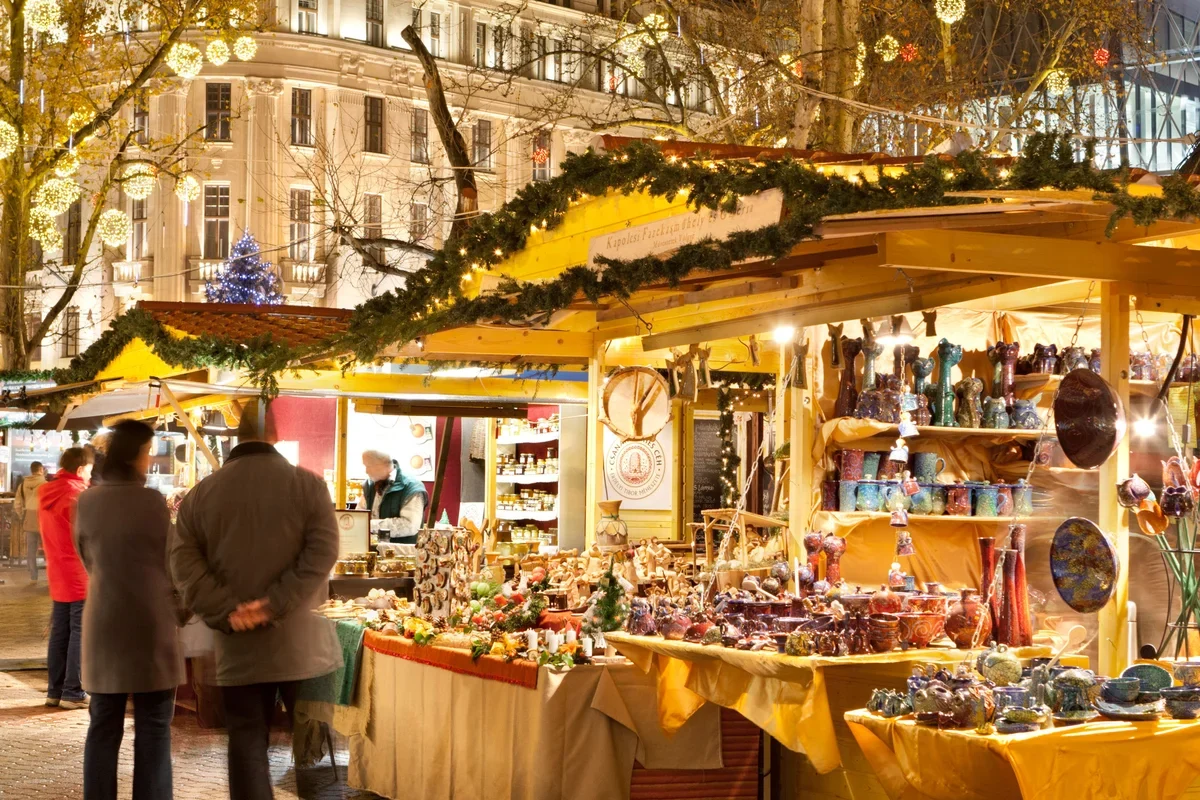
Best value: Budapest, Hungary
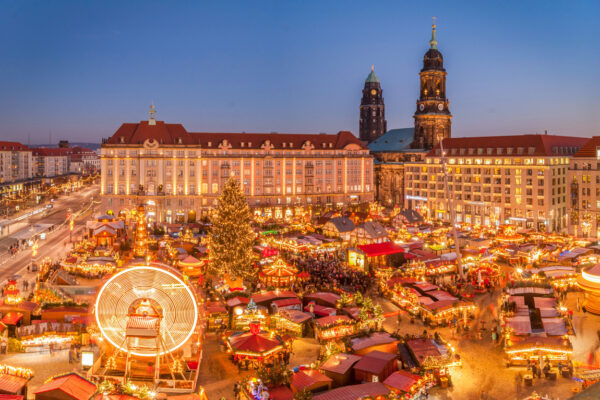
Best for Christmas market history: Dresden, Germany
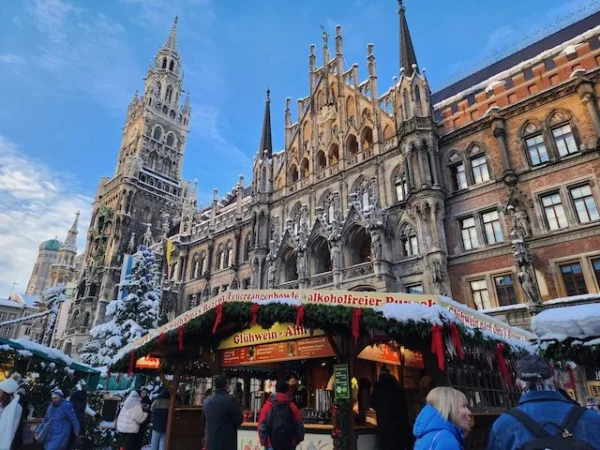
Best for a German Christmas trip: Munich, Germany
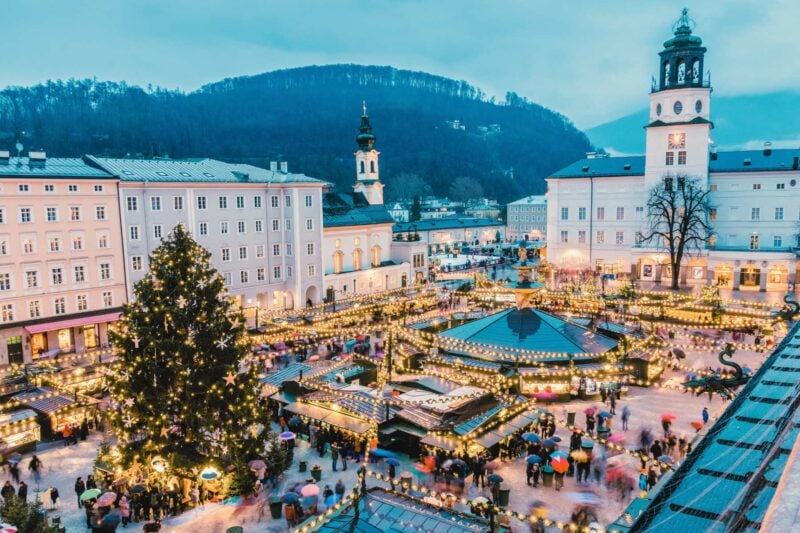
Best Alpine Christmas market: Salzburg, Austria
Best small-town Christmas market: Colmar, France
Strasbourg, France
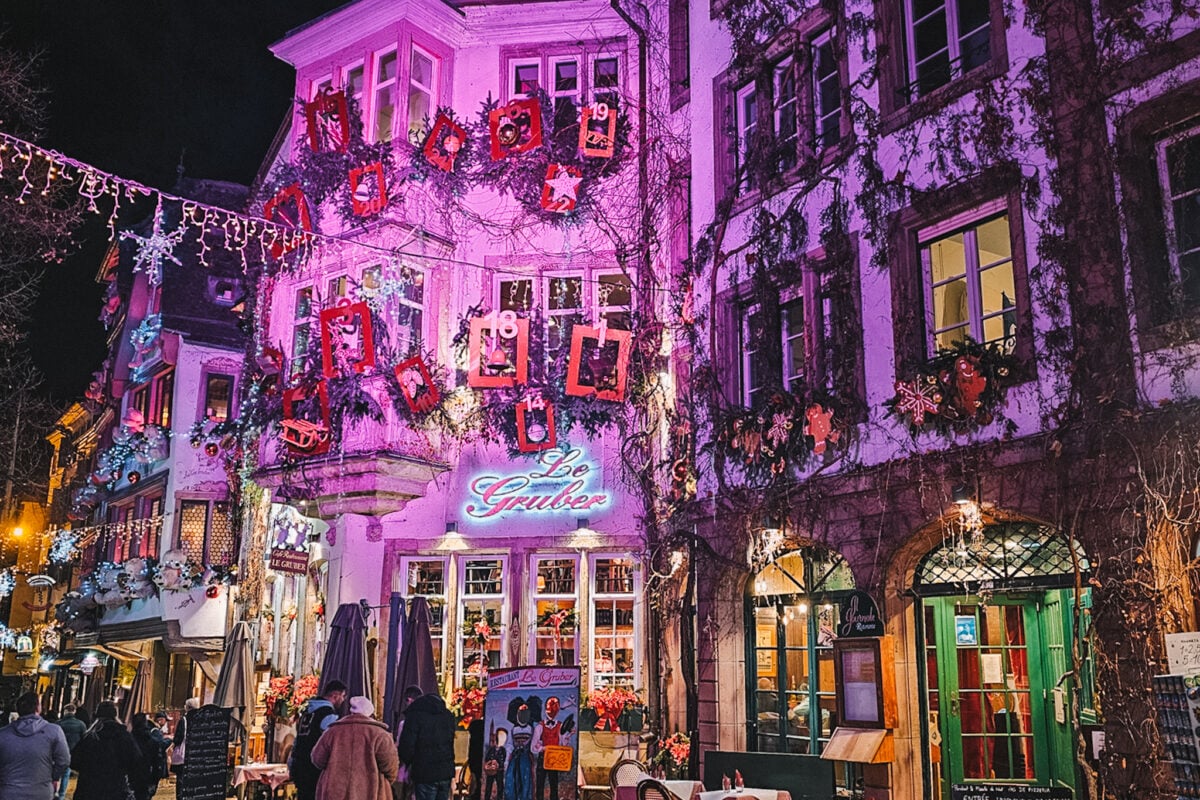
Strasbourg calls itself the “Capital of Christmas,” and after spending Christmas there with my family, I understand why. The Christmas market is enormous, with markets and stalls spread throughout the historic center. You could easily spend days exploring them all.
But what I remember most isn’t actually the market. It’s the buildings.
Businesses throughout Strasbourg decorate their exteriors for Christmas in a way I have never seen before or since. We saw enormous teddy bears climbing buildings, giant pretzels, oversized candy, greenery, ornaments, lights, and decorations covering entire facades. Walking around looking at the buildings was honestly as much fun as visiting the markets themselves.
We also went inside Strasbourg Cathedral and heard one of the best Christmas concerts I’ve ever attended. Sitting inside that incredible cathedral listening to Christmas music was one of the highlights of our trip.
Strasbourg’s Christmas market dates back to 1570, making it one of the oldest in Europe, but I think the reason to come is the entire experience. The markets, cathedral, lights, decorated buildings, food, and streets all become part of Christmas.
If you’re planning a trip specifically to experience one of the best Christmas markets in Europe, Strasbourg would be my first choice. And I would give it more than one day—you’ll want the time.
Colmar, France
Colmar is one of the prettiest towns I’ve visited in France, and at Christmas it somehow gets even better. We visited Colmar on the same trip as Strasbourg, and while I loved both, they felt very different.
Instead of one enormous Christmas market, Colmar has several markets tucked into different parts of the historic center. I loved that there was some space between them because you actually get to walk through the town as you move from one market to another. With Colmar’s colorful half-timbered buildings, canals, and elaborate Christmas decorations, the walk between the markets is part of the experience.
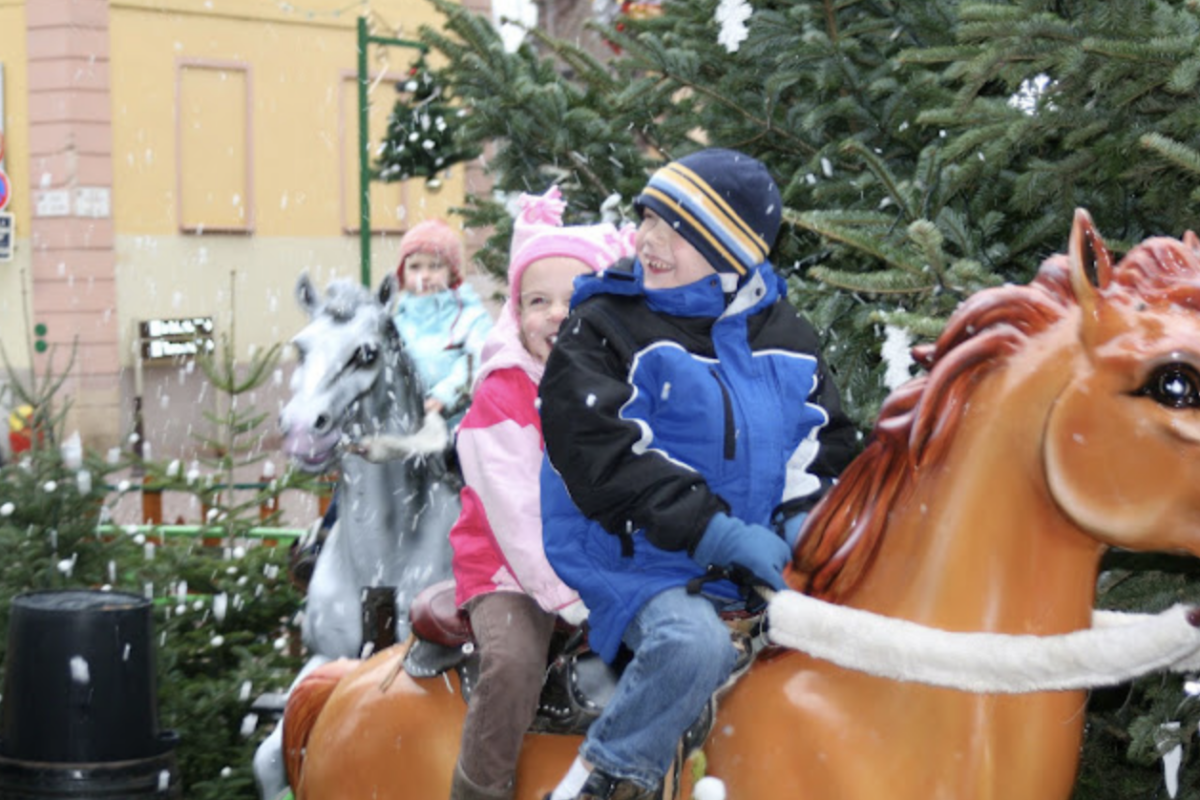
My kids especially loved one ride where they raced horses while fake snow fell around them. It’s one of those little Christmas memories they still remember, and it is part of why I think Colmar is such a good Christmas market destination for families.
There are plenty of stalls selling ornaments, gifts, food, and warm drinks, but Colmar itself is the real star. If you’re already planning to visit Strasbourg, I would absolutely make time for Colmar too. They’re close enough to combine in one Christmas market trip, but different enough that neither feels repetitive.
Vienna, Austria
Photo Credit: Depositphotos
Vienna is a great choice if you want to experience several Christmas markets in one trip. Markets pop up throughout the city during the holiday season, each with a slightly different atmosphere.
The biggest and most famous is the Christkindlmarkt at Rathausplatz in front of Vienna City Hall. You’ll find rows of decorated stalls selling ornaments, gifts, sweets, and warm drinks, along with elaborate Christmas lights and decorations.
But don’t stop there. Smaller markets around Schönbrunn Palace, Belvedere Palace, and Spittelberg give you completely different settings without leaving Vienna.
If this is your first Christmas market trip to Europe, Vienna is an easy choice because you can experience so many different markets while still having all of the museums, palaces, cafés, and sights of Vienna to enjoy during the day.
Nuremberg, Germany
Photo Credit: Depositphotos
Nuremberg’s Christkindlesmarkt is one of the oldest and most famous Christmas markets in Germany, and it is the place to go if you want a traditional German Christmas market experience.
The main market fills the Hauptmarkt in the Old Town with red-and-white striped stalls selling handmade ornaments, gifts, and traditional foods. Be sure to try Nuremberg’s famous small bratwurst and Lebkuchen, the city’s traditional gingerbread.
One of the things I like about Nuremberg is that the market still feels rooted in tradition despite its popularity. You aren’t coming for rides and flashy attractions. You’re coming for beautiful stalls, Christmas food, decorations, and that classic German Christmas atmosphere.
Cologne, Germany
Photo Credit: Depositphotos
Cologne has several Christmas markets scattered throughout the city, but the market beside Cologne Cathedral is the showstopper. The enormous Gothic cathedral towering over the wooden market stalls makes this one of the most dramatic Christmas market settings in Europe.
The markets each have their own personality, so it is worth visiting more than one. You can shop for ornaments and handmade gifts, drink glühwein, and try German Christmas treats as you make your way around the city.
Cologne is especially good if you want the traditional German Christmas market experience but also want enough variety to spend a couple of days exploring.
Copenhagen, Denmark
Photo Credit: Depositphotos
Copenhagen does Christmas especially well, but Christmas at Tivoli Gardens is what makes it stand out. The historic amusement park is covered with lights and decorations, with market stalls, seasonal food, rides, and Christmas displays throughout the gardens.
This is one of my favorite choices for families because there is much more to do than simply shop. Kids can ride the attractions while adults enjoy the market stalls, decorations, and plenty of Danish Christmas treats.
You’ll find other Christmas markets around Copenhagen as well, but if you only have time for one, make it Tivoli.
Brussels, Belgium
Photo Credit: Depositphotos
Brussels’ Winter Wonders celebration takes over the historic center with Christmas markets, lights, food stalls, and decorations stretching through several of the city’s central squares.
The setting around Grand Place is especially beautiful at Christmas, but for me, the food is half the reason to go. Between Belgian chocolate, waffles, fries, and all of the Christmas market treats, Brussels is a very easy place to spend a December weekend.
The market is also large enough that you can wander rather than feeling like you’ve seen everything in half an hour. Combine it with Brussels’ chocolate shops and beautiful architecture, and it makes a great Christmas market city even if shopping isn’t the main reason for your trip.
Prague, Czech Republic
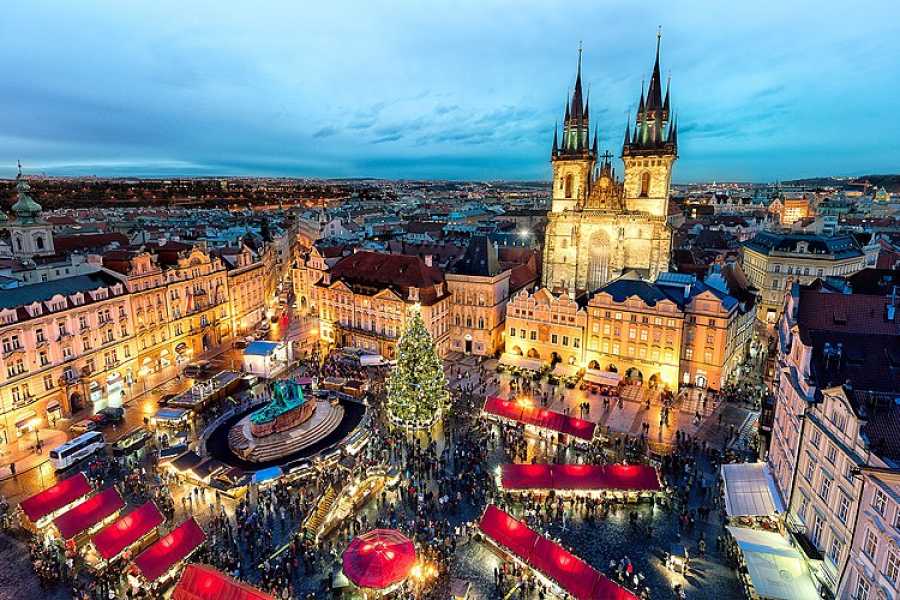
Prague already looks like a fairytale city, and Christmas makes it even prettier. The main Christmas markets are in Old Town Square and Wenceslas Square, surrounded by Prague’s colorful historic buildings and Gothic architecture.
The Old Town Square market is the one I would prioritize. There is a huge Christmas tree, wooden stalls selling gifts and ornaments, and plenty of Czech food and warm drinks.
Prague is a great choice if the atmosphere matters as much to you as the market itself. You can spend the day exploring Prague Castle and the Charles Bridge and then come back to Old Town after dark when the lights make everything feel especially festive.
Dresden, Germany
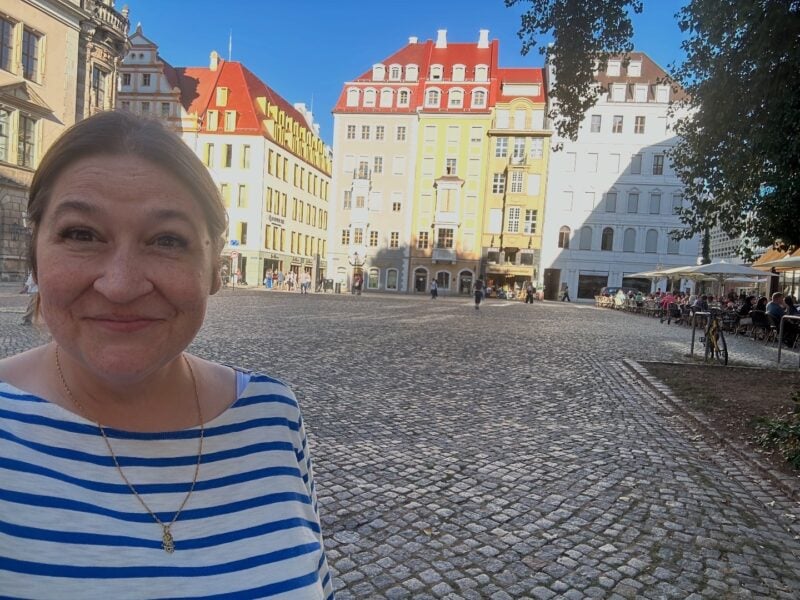
Dresden surprised me. I knew about its Christmas market before visiting, but I wasn’t prepared for how impressed I would be by the city itself. I visited during the summer, but the city is amazing. Dresden was heavily destroyed during World War II, and the way the historic center has been rebuilt is spectacular. Walking through it today, surrounded by grand Baroque buildings, it’s hard to comprehend the scale of what has been reconstructed.
That alone makes Dresden worth visiting, but at Christmas it has another claim to fame. The Dresden Striezelmarkt dates back to 1434, making it one of the oldest Christmas markets in Germany.
The market is known for traditional Saxon crafts, Christmas decorations, and Dresden’s famous Stollen, a rich fruit bread that has been part of the city’s Christmas tradition for centuries.
I would give yourself enough time here to do more than visit the market. Explore the rebuilt historic center during the day, then return to the Christmas market after dark when the lights are on. Dresden is one of those places where the city itself is as memorable as the Christmas market.
Munich, Germany
Munich is a great choice if you want a traditional German Christmas market combined with a bigger city trip. The main Christkindlmarkt takes place in Marienplatz, right in the heart of the historic center, with the Neues Rathaus providing a beautiful backdrop.
The market is filled with wooden stalls selling ornaments, handmade gifts, gingerbread, roasted nuts, and plenty of glühwein. But Munich also has smaller themed Christmas markets scattered around the city, so you aren’t limited to just one.
One of the best things about choosing Munich is everything else you can do while you’re there. You can explore the historic center, visit the beer halls, and easily combine the city with other Bavarian destinations.
If you want your Christmas market trip to feel like a full European vacation rather than a trip built entirely around Christmas markets, Munich is an especially good choice.
Salzburg, Austria
Salzburg feels made for Christmas. With its Baroque Old Town, church domes, fortress overlooking the city, and mountains in the distance, you really couldn’t ask for a prettier setting for a Christmas market.
The main Christkindlmarkt fills Cathedral Square and Residenzplatz with traditional wooden stalls selling ornaments, gifts, Austrian foods, and warm drinks. Salzburg has a long Christmas market tradition, and the market feels much more traditional than flashy.
Salzburg is also a great choice if you want more than Christmas markets. You can explore Mozart’s hometown, visit the fortress, and see some of the locations associated with The Sound of Music.
But I think the setting is what really makes Salzburg special. If your idea of a European Christmas involves old buildings, mountains, lights, and traditional Christmas stalls, this is the one.
The city’s best-known markets are around Vörösmarty Square and St. Stephen’s Basilica. Expect wooden stalls filled with Hungarian crafts, Christmas decorations, and lots of food.
Make sure you come hungry. Hungarian specialties like chimney cake, sausages, and hearty hot dishes are a big part of the experience.
Budapest is also particularly beautiful after dark, when the city and Christmas markets are illuminated. Add in the thermal baths, Danube views, and impressive architecture, and there’s plenty to do beyond the markets.
Tips for Visiting Christmas Markets
Photo Credit: Deposit Photo
Visiting Christmas markets can be an exciting and magical experience. Here are some tips to help make your visit more enjoyable:
Arrive early: Arriving early in the day will allow you to beat the crowds and have a more relaxed experience. You’ll also have more time to explore and shop before the market gets too busy.
Dress warmly: Most Christmas markets are held outdoors, so it’s important to dress warmly. Wear layers, and don’t forget a hat, gloves, and scarf to keep yourself comfortable.
Bring cash: While some vendors may accept credit cards, it’s always a good idea to bring cash. This will make it easier to purchase items and avoid long lines at ATMs.
Try the local food and drink: Christmas markets are known for their delicious food and drink. Be sure to try some local specialties, such as mulled wine, gingerbread, and roasted nuts.
Be mindful of your belongings: Christmas markets can be crowded, so keep an eye on your belongings. Keep your wallet and phone secure, and be aware of your surroundings.
Take in the atmosphere: Christmas markets are more than just shopping. Take the time to enjoy the festive atmosphere, listen to the live music, and soak up the holiday spirit.
By following these tips, you’ll be able to have a more enjoyable and stress-free experience at Christmas markets around the world.
How to Plan a European Christmas Market Trip
Photo Credit: Deposit Photos
Most European Christmas markets begin in late November and run through Christmas, although exact dates vary by city and some continue into early January. If you have flexibility, I prefer visiting on weekdays when the markets are considerably less crowded.
Stay as close to the historic center as your budget allows. One of the best parts of a Christmas market trip is being able to wander through the markets at night without worrying about transportation back to your hotel.
You also don’t necessarily need to choose just one city. Some Christmas markets are easy to combine in the same trip. We visited Strasbourg and Colmar together, which worked beautifully because the two markets felt completely different despite being so close to each other.
I would plan at least two nights in the larger Christmas market cities. Places like Strasbourg and Vienna have enough markets and other things to see that trying to squeeze everything into a single day can feel rushed.
Frequently Asked Questions About Christmas Markets in Europe
Where are the best Christmas markets in Europe?
Some of the best Christmas markets in Europe are in Strasbourg, Vienna, Nuremberg, Cologne, Dresden, Prague, Budapest, Salzburg, Copenhagen, Brussels, Munich, and Colmar. Germany, Austria, and the Alsace region of France are especially good choices for a Christmas market trip.
What is the best Christmas market in Europe?
Strasbourg is my pick for the best overall Christmas market in Europe. The markets are enormous, but what makes Strasbourg extraordinary is how the entire historic center seems to participate in Christmas. The elaborate decorations covering the buildings are unlike anything I’ve seen elsewhere.
Which country has the best Christmas markets?
Germany is hard to beat for traditional Christmas markets. Nuremberg, Cologne, Dresden, and Munich are all excellent choices. Austria and France are close behind, particularly Vienna, Salzburg, Strasbourg, and Colmar.
What are the best Christmas markets in Germany?
Nuremberg, Cologne, Dresden, and Munich are four of the best Christmas market destinations in Germany. Dresden and Nuremberg are particularly good choices if experiencing a historic German Christmas market is important to you.
When do Christmas markets in Europe start?
Most European Christmas markets open in the second half of November and continue until just before or through Christmas. Some stay open through New Year’s. Dates change each year, so always check the official market dates before booking your trip.
How many days do you need for a European Christmas market trip?
I would plan at least two or three days for a major Christmas market city, especially somewhere like Strasbourg or Vienna where there are multiple markets to explore. With a week, you can easily combine several cities or towns.
Can you visit Strasbourg and Colmar Christmas markets on the same trip?
Absolutely. We visited both on the same trip, and I highly recommend the combination. Strasbourg is much larger and feels completely immersed in Christmas, while Colmar has several smaller markets spread through its gorgeous historic center. They are different enough that visiting both doesn’t feel repetitive.
There may be affiliate links in this post. Read my disclosure policy to learn more.










Leave a Comment