We drove all the way from Anchorage to Fairbanks to see the Northern Lights. We went out looking for them several times and saw nothing—then found out people had seen them back in Anchorage. I struck out in Tromsø, Norway, too. On a winter trip to the Isle of Skye, we went out night after night without any luck.
Iceland was no different at first. I had spent nights looking for the lights on earlier trips, and it wasn’t until my fourth visit, in October, that I finally saw them from a boat outside Reykjavík. After all those years of trying, I could hardly believe they were actually there.
So when I call these the best places to see the Northern Lights, I don’t mean that any of them can promise you a sighting. I’ll show you where I’d go for the best chance, where I’d go for the trip even if the sky stays dark, and what I learned from all those nights spent looking up.
Best Places to See the Northern Lights: Quick Picks
Best place in the U.S.: Fairbanks, Alaska
Best for a trip focused on the aurora: Yellowknife, Canada
Best for guided tours and city comforts: Tromsø, Norway
Best small Arctic base: Abisko, Sweden
Best for a family winter vacation: Finnish Lapland
Best for a bigger sightseeing trip: Iceland
Best choice in Scotland: Shetland, with Orkney and the far north of mainland Scotland also worth considering
My advice: Give yourself several nights wherever you go. I missed the lights in Fairbanks and Tromsø, went looking night after night on Skye, and didn’t finally see them in Iceland until my fourth visit.
How to Choose Where to See the Northern Lights
If seeing the lights is the main reason for your trip, start with a northern destination where you can stay for several nights. Fairbanks, Yellowknife, Tromsø, and Abisko are all places people travel specifically to watch the aurora. But the location is only part of the equation: you still need darkness, a clear sky, and aurora activity on the same night.
I would also think about the trip you’ll have if you don’t see them. Would you enjoy exploring Iceland, spending winter days in Tromsø, or traveling through Scotland anyway? I’ve missed the lights in places famous for them, so I would never plan a vacation with nothing else to look forward to.
Finally, give yourself more than one night if you can. A cloudy evening can hide a display completely. Having a few chances to go out made far more sense to me than flying somewhere and hoping everything would line up on one particular night.
Check the aurora forecast and the clouds
Before heading out, check two things: whether aurora activity is expected and whether you’ll actually have a clear view of the sky. A solar storm can produce a wonderful display, but clouds can hide every bit of it.
I’ve used these apps so many times. On a cruise around Iceland, I checked the forecasts religiously, and I did the same thing on the Isle of Skye. They’re great tools, but cloud cover has often been the thing that stopped us from seeing the lights.
My Aurora Forecast is an easy app to start with. It shows aurora activity and can send an alert when activity is expected to be high near you. I’d also check NOAA’s 30-minute aurora forecast when deciding whether to go out that night. It shows where the aurora is predicted in the short term, but it cannot tell you whether the sky above you is clear.
For cloud cover, look at a weather map before choosing where to wait. In Iceland, the Icelandic Meteorological Office’s aurora forecast is especially useful because it puts the cloud forecast and aurora activity on the same page. In other destinations, an app such as Windy lets you look for breaks in the clouds. If you’re in Scotland, AuroraWatch UK can alert you when the lights might be visible.
I wouldn’t treat an alert as a promise to see anything—I learned that lesson on several trips! Use it as your cue to check the cloud cover, find a dark place, and look up.
Fairbanks, Alaska
Best time: Late August through April; we went in March. How to look: Stay outside the brightest part of town or book a local aurora outing, and give yourself more than the two nights we had.
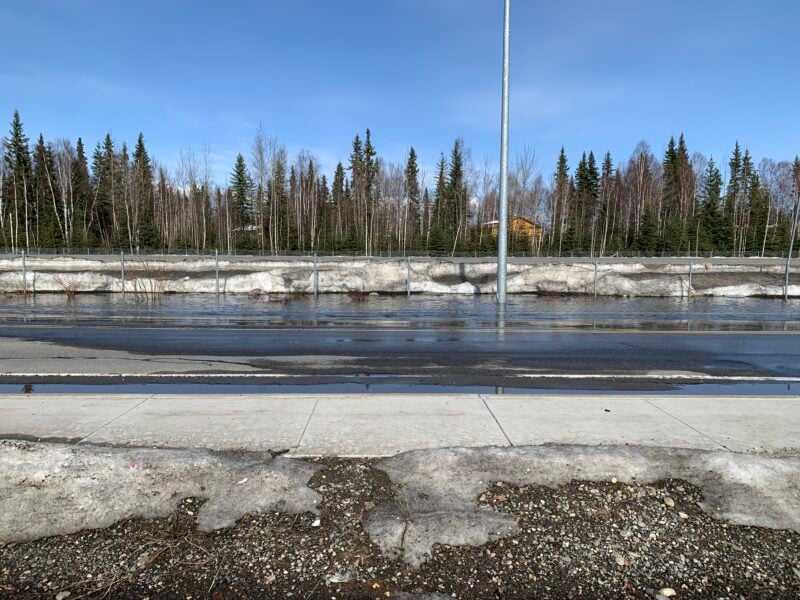
Fairbanks is one of the best places in the United States to look for the Northern Lights, which is why we drove there from Anchorage in March. We only had two nights, and we went out looking both nights. One evening, we drove as far from the city lights as we could and ended up parked in a lot beside a factory, staring at the sky. We still didn’t see them.
The frustrating part? We later learned that people had seen the Northern Lights in Anchorage while we were up in Fairbanks! That’s how unpredictable this can be, even when you’ve gone to a place known for aurora viewing.
I’m glad I got to see Fairbanks, but in March, what I remember most about the city itself is a lot of snow. I wouldn’t make the drive from Anchorage just to visit Fairbanks at that time of year. If seeing the lights is your main goal, though, I would give yourself more than the two nights we had and make plans you’ll enjoy during the day, too.
Tromsø, Norway
Best time: Late August through early April. Our April stop was at the very end of the season. How to look: A guided aurora chase can travel away from Tromsø in search of clearer skies. We looked on our own during our one-night stop.
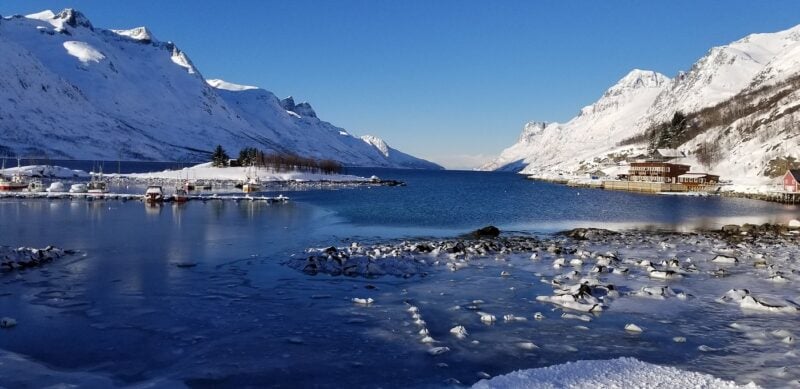
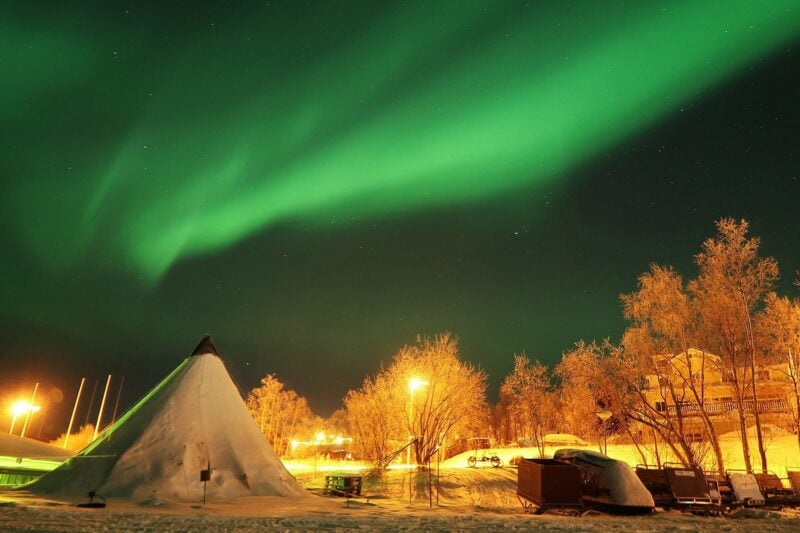
Tromsø is one of the best-known places to look for the Northern Lights, but our timing gave us a very small window. We stopped for just one night in April during a Norway road trip. It was the tail end of aurora season, although locals told us it was still possible to see them. We went out on our own that night and had no luck.
I loved Tromsø anyway. It’s adorable, with a fun downtown that we really enjoyed walking around—and, amusingly, the northernmost McDonald’s in the world. I would happily go back and spend more time there.
If the Northern Lights are your main reason for visiting, I wouldn’t copy our one-night April stop. Give yourself several nights so you can try again if clouds get in the way, and consider a guided chase if you’d rather have someone help find a clear sky.
Scotland: Isle of Skye, Shetland, and Orkney
Best time: Autumn and winter, when the nights are dark enough. We tried for three nights on Skye at the end of March. How to look: Find a dark spot with a clear northern horizon and watch the cloud forecast. Shetland, Orkney, and Caithness are other Scottish areas to consider.
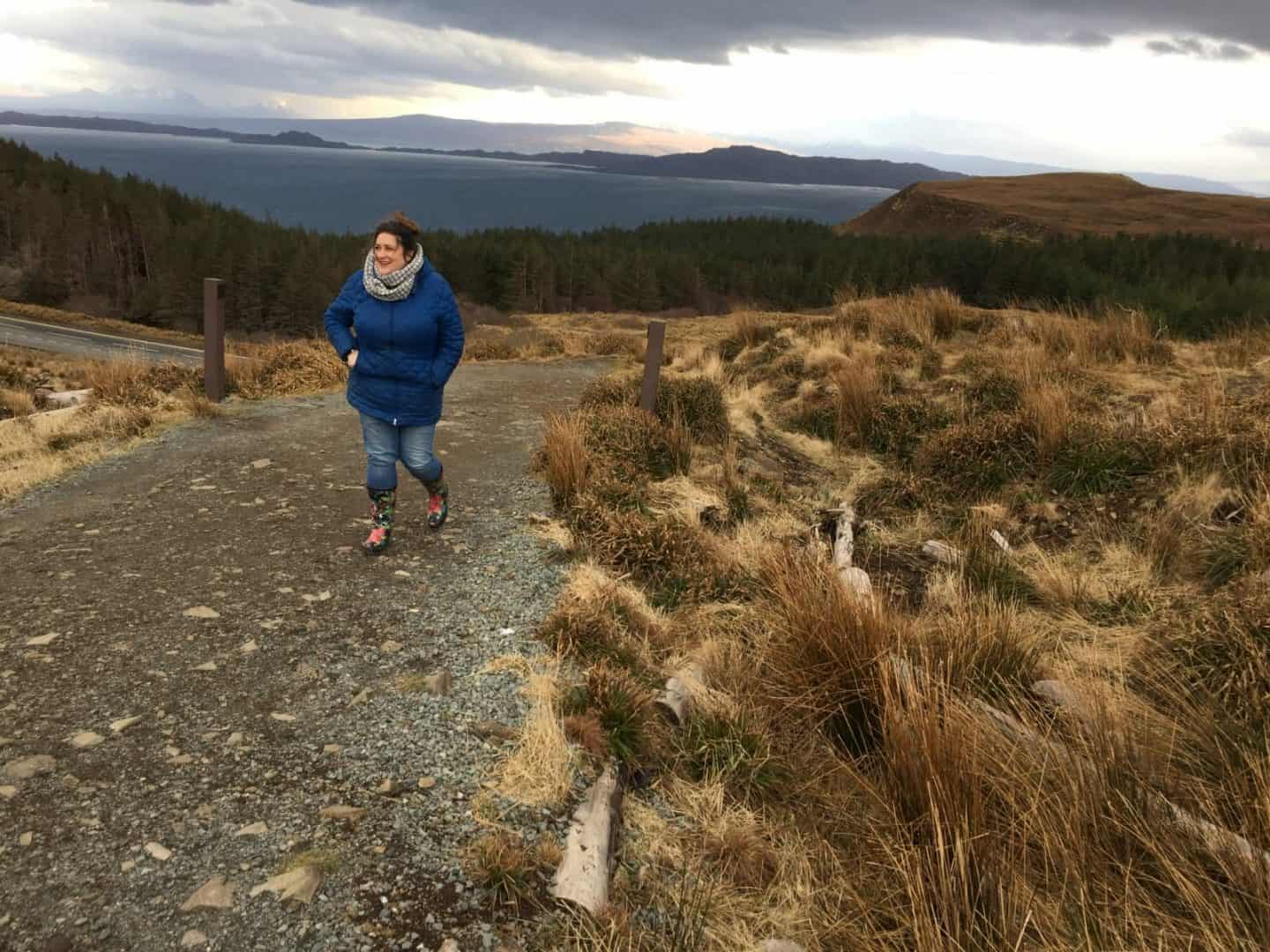
We spent two nights in Uig on the Isle of Skye at the end of March, and we went out looking for the Northern Lights every night. I kept checking the aurora apps, but clouds were the problem. We never got to see them.
I still loved Skye. The island is worth the trip whether or not the sky puts on a show, and I wouldn’t hesitate to go back. That’s why I’d plan a visit there around everything you want to see on the island, with the Northern Lights as a wonderful possibility rather than the whole reason to go.
If you’re choosing a Scottish destination specifically to watch for the aurora, also look at Shetland, Orkney, or Caithness in the far north of the mainland. You’ll still need a clear, dark sky and some luck. Our three cloudy nights on Skye were a reminder that even when the forecast says the lights are possible, the weather gets the final say.
Iceland: Where I Finally Saw the Northern Lights
Best time: September through April. I finally saw the lights in October. How to look: Check the Icelandic Meteorological Office’s cloud map, then consider a tour from Reykjavík or a stay away from city lights. I saw them from a boat a few miles offshore
I had looked for the Northern Lights on earlier trips to Iceland without any luck. It wasn’t until my fourth visit, in October, that I finally saw them. My family had visited in March and April before and although we looked both times, we didn’t see them.
I was there on a press trip, and we had been booked on a Northern Lights boat tour from Reykjavík. It was freezing, and the aurora forecast was low—around 1 or 2. Even the captain told us our chances were slim. We sailed a few miles away from the city anyway.
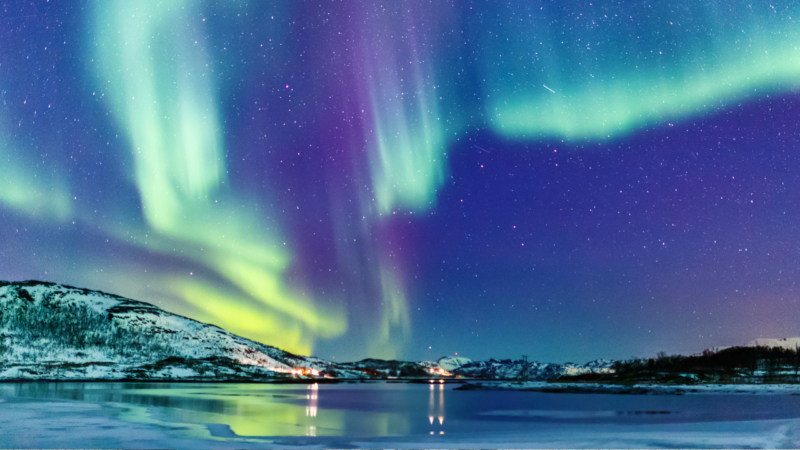
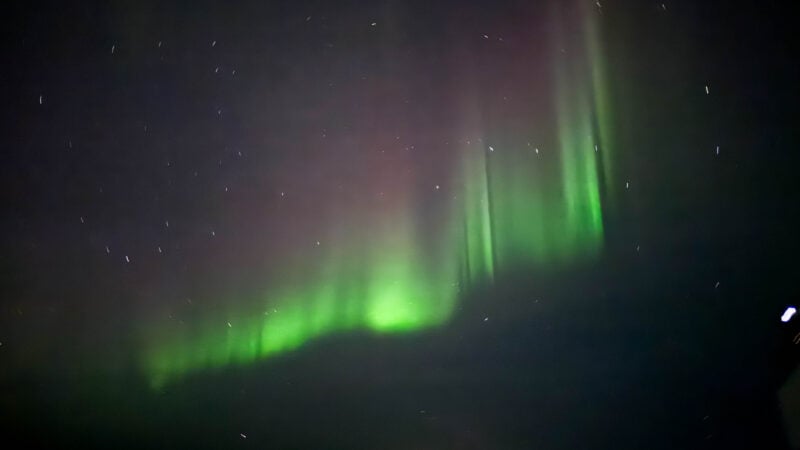
Someone spotted a small patch of light, so the captain stopped the boat. At first, the lights were so faint that I wondered if I was really seeing them. But we stayed there for about an hour, and they grew larger and deeper until, at one point, they seemed to surround us. My phone picked up more color than I could see with my eyes, but I didn’t need the photo to know how magnificent it was. I was freezing and didn’t care one bit.
Iceland is a place I would visit even without the Northern Lights. There is so much to see during the day, and an aurora sighting can make an already wonderful trip unforgettable. Just leave room in your plans to try more than once—I needed four visits before the sky finally cooperated.
Yellowknife, Canada
Best time: Mid-August through September for a fall trip, or roughly mid-November through early April for a winter one. How to look: Choose a dark location outside the city lights or book a local aurora tour, and stay for several nights.
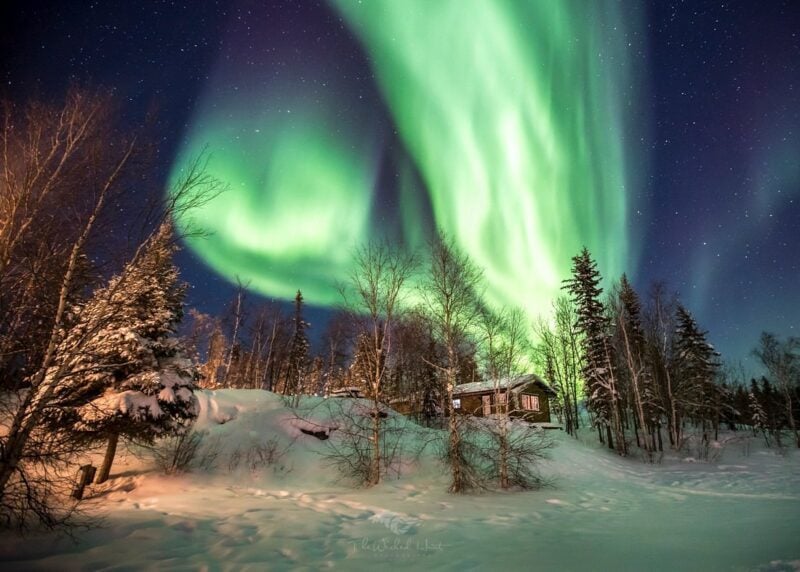
If seeing the Northern Lights is the main purpose of your trip, Yellowknife is one of the places I would consider. It sits beneath the auroral oval and has dark skies and local tours built around viewing the lights.
One thing I like about Yellowknife is that you can choose between two very different trips. The Northwest Territories has a fall aurora season, roughly mid-August through September, when you can look for the lights without planning a deep-winter vacation. Its longer winter viewing season runs from about mid-November into early April. I’d still book several nights and check the cloud forecast each day; even here, a sighting isn’t guaranteed
Abisko, Sweden
Best time: September through late March, with sightings sometimes possible in early April. How to look: Watch from around Abisko National Park or book a night visit to the Aurora Sky Station. Check the weather even though Abisko often has clearer skies than nearby areas.
Abisko is the place I would look at if I wanted to make the Northern Lights the main event of a Sweden trip. I haven’t been there myself, but it has one advantage that caught my attention after all my cloudy nights elsewhere: the mountains around Abisko can leave the national park with clear skies even when nearby areas are cloudy. That still isn’t a guarantee, but I can see why aurora watchers choose it.
You can watch from the area around Abisko National Park or book a night visit to the Aurora Sky Station on Mount Nuolja. I’d give myself several nights and make time for the snowy landscape during the day, too. The usual viewing season runs from September into late March, with sightings sometimes possible in early April.
Finnish Lapland: A Northern Lights Trip With Kids
Best time: Late August through early April; choose winter if snowy activities are part of the trip you want. How to look: If you’re staying in Rovaniemi, go beyond the city lights on a clear night or take a guided outing.
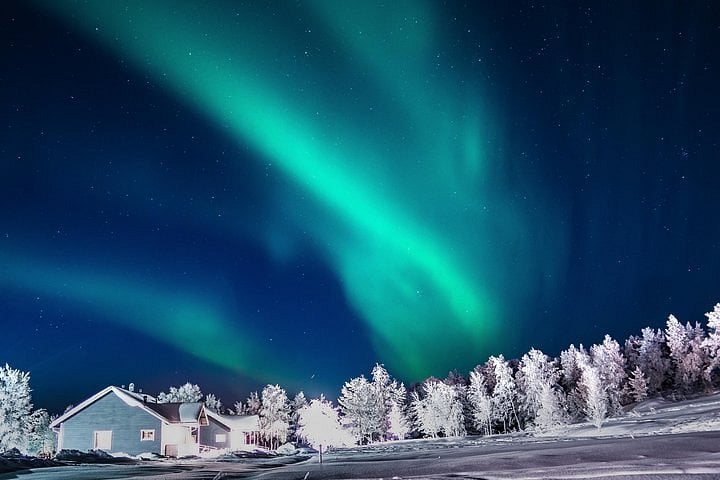
Finnish Lapland appeals to me as a family winter trip with a chance to see the Northern Lights. Rovaniemi gives you plenty to do during the day, including Santa Claus Village and winter activities, so the trip can still feel special if clouds spoil an evening’s aurora plans.
For the lights, you’ll want a clear, dark sky away from Rovaniemi’s city lights. You could stay outside town or go out with a guide rather than expecting to see them from your hotel window. The viewing season runs roughly from late August into early April; winter gives families the snowy Lapland experience, while an autumn trip offers a different kind of scenery.
Whitehorse, Yukon
Best time: Mid-August through mid-April. Early fall offers a trip without deep-winter conditions; winter brings longer nights. How to look: Use Whitehorse as your base, then head to a darker viewing area such as Fish Lake or join an evening aurora tour.
Whitehorse would be my pick for someone who wants a Yukon trip with Northern Lights watching built into it. You can use the city as a base, then go somewhere darker at night. Travel Yukon suggests spots around Fish Lake and Schwatka Lake, as well as guided trips away from the city lights.
The Yukon’s viewing season runs roughly mid-August to mid-April. An early fall trip would be especially appealing if you want to see the landscape without making it a deep-winter vacation; winter gives you longer nights. Either way, I’d stay several nights and check both aurora activity and cloud cover before heading out—exactly the lesson I learned in Fairbanks.
How to Plan Your Northern Lights Nights
First, give yourself more than one chance. We went out both nights in Fairbanks and all three nights on Skye without seeing the lights. If the aurora is the main reason for your trip, I would stay at least three nights—and longer if your schedule allows.
Each afternoon, check the aurora forecast and the cloud cover, then keep your evening flexible. A forecast can tell you activity is possible, but a patch of clear sky may matter more than a promising number on an app. Be prepared to go out late and to wait; on our boat trip in Iceland, the lights started faintly and grew over the next hour.
You can look on your own, as we did in Fairbanks, Tromsø, and Skye, or book a tour. I’d consider a guided chase if I didn’t want to drive unfamiliar winter roads at night or if the guide could travel to a clearer area. Either way, bring warmer clothes than you think you’ll need. I was freezing on that boat outside Reykjavík, and once the lights surrounded us, I didn’t want to go inside.
Northern Lights FAQ
How many nights should I stay to see the Northern Lights?
I would plan at least three nights if seeing them is a major reason for the trip. We had only two nights in Fairbanks and one in Tromsø, and missed them in both places. More nights give you another chance if clouds cover the sky.
Can you see the Northern Lights without a tour?
Yes. We looked on our own in Fairbanks, Tromsø, and Skye, and I finally saw the lights on a boat tour in Iceland. A tour can help with transportation and finding a darker or clearer spot, but it cannot guarantee a sighting.
What is the best place to see the Northern Lights in the United States?
I would start with Fairbanks, Alaska. Its location makes it a strong aurora destination, and there are viewing tours and places to stay outside the city lights. Just remember our experience: we drove up from Anchorage, looked both nights, and still missed them!
Can you see the Northern Lights in Scotland?
Yes, although I would plan a Scotland trip for Scotland first and treat the lights as a bonus. We looked for them on three nights on the Isle of Skye in March, but the clouds never cleared enough for us to see them. Shetland, Orkney, and the far north of mainland Scotland are other places to consider.
Do the Northern Lights look as colorful in person as they do in photos?
Sometimes, but a phone camera can pick up colors that look much fainter to your eyes. When I first saw the lights from a boat near Reykjavík, they started as a faint patch. My phone showed more color, but as the display grew, seeing the lights spread around us was magnificent even without a camera.
Final Thoughts
If I were booking another trip just to see the Northern Lights, I’d give myself several nights in a place like Yellowknife, Fairbanks, or Abisko. But if I wanted a trip I knew I’d love either way, I’d choose Iceland again. It took me four visits to finally see the lights there, and every visit was worth taking.
I’ve stood outside in Fairbanks, Tromsø, and Skye hoping the sky would do something. Then, on a freezing boat a few miles from Reykjavík, the lights appeared when even our captain thought our chances were slim. You can choose a good location, follow the forecasts, and give yourself time. After that, you have to let the sky surprise you.
There may be affiliate links in this post. Read my disclosure policy to learn more.





Leave a Comment