I will be honest, Vietnam is pretty sensational. I just spent 3.5 months there, and I’m still buzzing from it all. Before I left, I managed my money situation properly and thank god I did!
I know we all want to go crazy and blow our cash when travelling (and trust me, I had those moments too), but reality kicks in pretty quickly if you don’t watch your spending. I managed to make every penny count because I wasn’t completely reckless with my money.
Whether you’re planning to work from a café in Hanoi, backpack from top to bottom, or just chill for a few months, I’ve got the real deal on what things actually cost in Vietnam.
I’ll break down everything. Where the book accommodation, the best cheap eats, how to get around without getting ripped off, and all the cool stuff you can do without emptying your wallet.
The short answer? You can travel Vietnam on about $25–$40 a day if you are careful, while $50–$90 a day gives you more comfortable hotels, plenty of restaurant meals, Grab rides and room for activities. Of course, you can spend much more, but Vietnam does not have to be an expensive trip.
Here’s my guide to surviving (and loving) three months in Vietnam without going broke.
Vietnam can still be an extremely affordable destination, but your total will depend on your travel style. These are realistic planning ranges in US dollars per person.
Budget Traveler
Per day: $25–$40
One week: $175–$280
Two weeks: $350–$560
Hostels or basic guesthouses, street food, local transportation and inexpensive attractions.
Midrange Traveler
Per day: $50–$90
One week: $350–$630
Two weeks: $700–$1,260
Comfortable hotels, a mixture of local and restaurant meals, Grab rides and regular tours or activities.
Luxury Traveler
Per day: $120+
One week: $840+
Two weeks: $1,680+
Upscale hotels, private transportation, fine dining and premium tours or experiences.
For a longer stay: Monthly accommodation discounts and slower travel can reduce the daily cost considerably. My own three-month budget was lower per day than someone taking a shorter vacation.
These estimates exclude international airfare, travel insurance, visa costs and major splurges such as premium overnight cruises. Costs are also affected by whether you travel alone or share accommodations.
How Much Does It Cost to Travel Vietnam for 3 Months?
My advice for a three-month trip to Vietnam on a mid-range budget is to put aside €3,500-€4,000.
This doesn’t mean low-quality hotels or guesthouses. It can include accommodations with pools and breakfast. This budget combines street food and restaurant meals in equal measure.
It includes tea and coffee whenever you fancy it. Coconuts on those hot, humid days and ice cream almost every day (though my waistline wasn’t thrilled about this!)
Don’t forget that this includes Grab rides all over the city whenever I need them. Whether to a restaurant to meet friends or to get to the beach in a fast and affordable way.
Vietnam is one of Southeast Asia’s cheapest countries in my experience, and your money goes a long way.
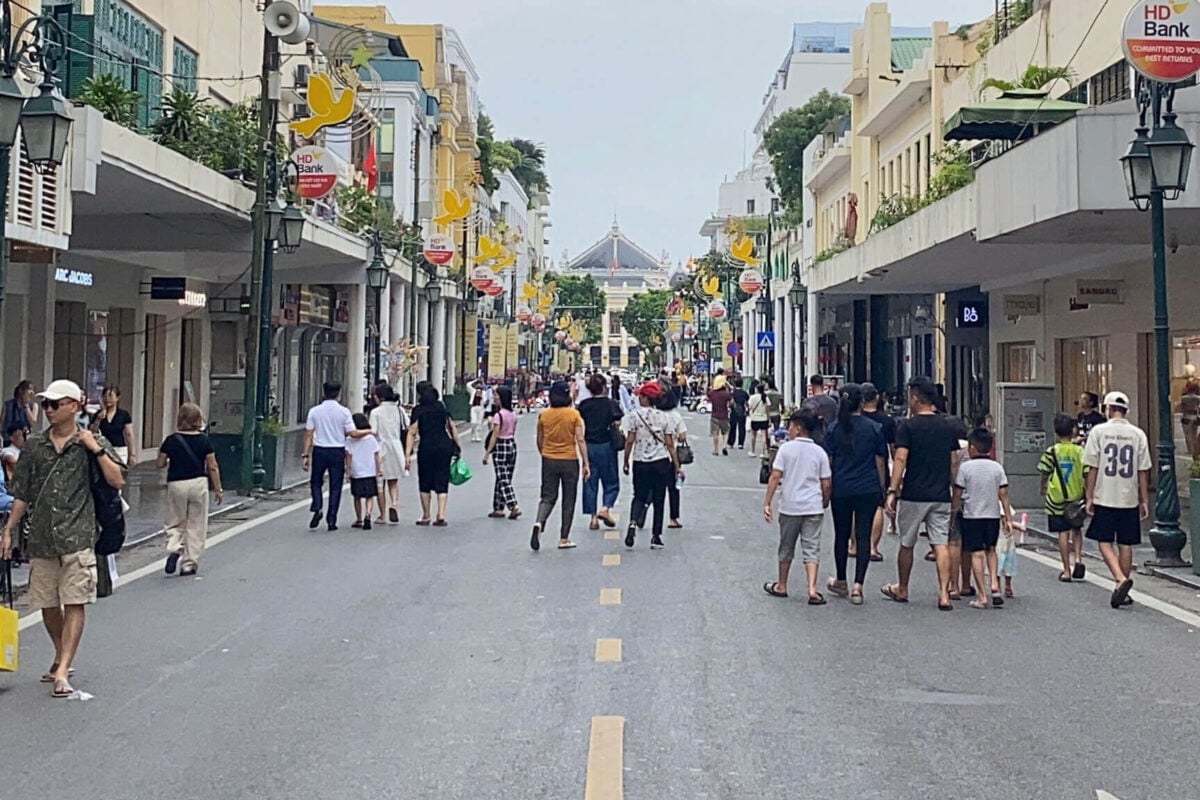
Additionally, some attractions are completely free (like Hanoi Train Street) to visit, which is great when you’re budgeting for an epic trip to Vietnam.
Visa and Entry Costs
When I wanted to enter Vietnam, as an Irish citizen, I needed to get a visa.
You can get a single-entry 90-day visa or a multiple-entry visa. I opted for the former, but this choice depends on your travel plans.
You can apply here and fill out your details, but requirements vary depending on your nationality. Try not to make mistakes with this part as it’s extremely important!
If you’re like me and want to explore Vietnam thoroughly in three months, then a single-entry visa is perfect. If you plan to move in and out of Vietnam, then consider a multiple-entry visa.
Accommodation Costs
If you want to save money on accommodation in Vietnam, you certainly can. Let me give an example.
When I stayed for three weeks in the same hotel, right in the middle of the Old Quarter, it cost me €273 for the entire time. Did I mention it was IN THE OLD Quarter?
This is an incredible value. Breakfast was included every day, and I could walk to the centre of the action.
Any lower on this budget and you will likely see a fall in the value. If you want more luxury, the sky is the limit on costs.
Furthermore, I could get a 4-star hotel metres from the beach in Da Nang—including a pool and breakfast—for ONE MONTH for less than €300.00. It begs the question: how is this possible? That’s Vietnam.
I should point out that I’m on the Genius level where discounts are applied. While they can be substantial, I urge you to use these to save money on your trip too.
Daily, I was spending anywhere from 50,000 Vietnamese dong (£1.90) per meal to 200,000 Vietnamese dong. To get great food in Hanoi, you don’t need to go over this budget.
There are loads of more expensive options, but I found the value isn’t worth the cost.
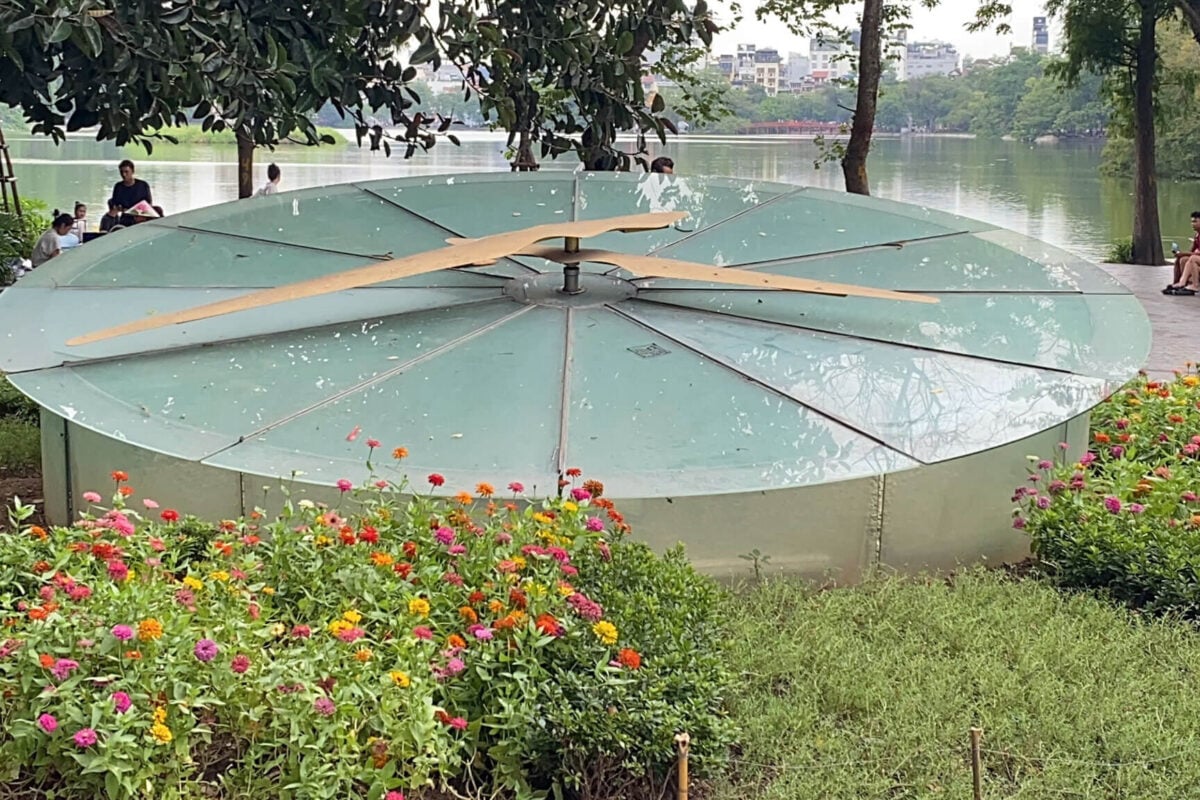
For drinks, a coffee could cost between 30,000-100,000 Vietnamese dong depending on the location. For example, the Coffee Club at Qu?ng tr??ng ?ông Kinh – Ngh?a Thúc overlooking the former site of Hanoi’s shark-jaw building (since demolished when I was there) cost 85,000 Vietnamese dong.
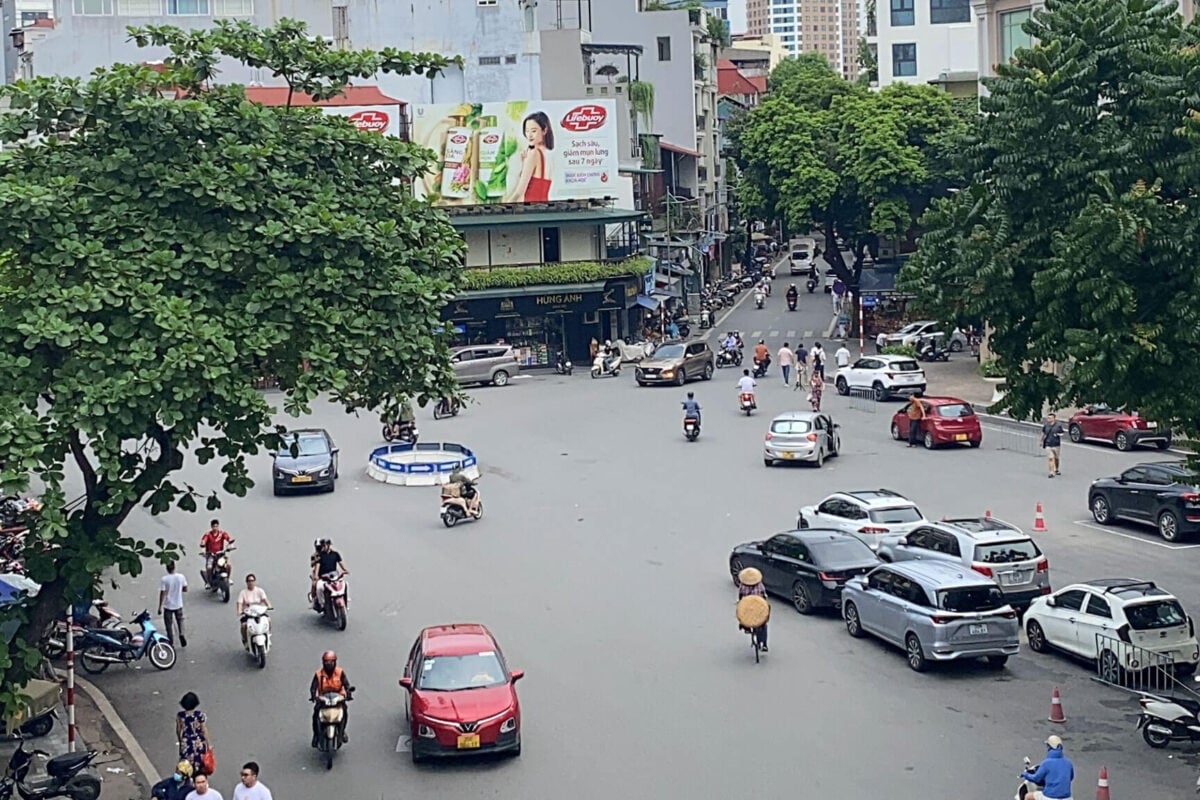
Whenever I moved around a city, I used Grab motorbike or the occasional Grab car.
These were very cheap. When I look back at the app or emails, I see numerous rides per day, mostly under €1.00. Some were €2-3 when I needed to go further or travelled at peak times.
Taking a regular taxi is significantly more expensive.
For moving between cities, I would take the train.
It’s the most scenic and comfortable for long journeys in my opinion. I went from Hanoi to Sapa, Ninh Binh and Da Nang using the train, all without issue.
Going from Hanoi to Ha Long Bay and Cat Ba Island, I used minivans and sometimes
Activities and Attractions
During my three months in Vietnam, here is the list of places I visited:
Hanoi
Sapa
Cat Ba Island
Ha Long Bay
Ninh Binh/Tam Coc
Hue
Hoi An
Da Nang
My favourite was Sapa, and I only spent one week there, which was a mistake in hindsight. I could have spent two and really enjoyed the mountains and peaceful vibe that it has going on.
I found Cat Ba Island and Hanoi to be the most expensive.
That said, the difference wasn’t huge, and I still found them manageable on a backpacker’s budget.
Overall, the cost, the mix of hectic cities, quiet countryside, and coastal train journeys made Vietnam feel like one of the most rewarding countries I’ve explored.
SIM Cards, Internet, and eSIMs
When I travelled throughout Southeast Asia, I always used to get a physical SIM card.
This took time and was expensive, so for the first time in Vietnam, I tried an eSIM.
Airalo was fantastic. I never really had any connectivity problems, even when I was in the most rural parts of North Vietnam, which impressed me a lot.
It only took minutes to set up, compared to half an hour in 7/11.
The most I paid was $20 for 10GB of usage, and because most places have amazing WiFi, it always lasted one month at least.
My biggest takeaway is that while eSIMs may be slightly more costly, they’re worth it over a physical SIM card. However, I would urge you to check how it performs before you jump into the jungle or mountains for days on end to ensure you have a trusty connection.
Budgeting Tips to Stretch Your Money
My biggest money killer was massage!
In Hanoi, there are literally hundreds of places to get a massage. At home, it would cost between $40-80. In Hanoi, however, it’s only about $5.
So there was a time when I would get one almost every day. Don’t do this if you’re trying to save money!
Eat at street stalls where locals fill the seats; you know you can trust them, whereas an empty street stall would make me question its quality.
Hanoi has some great, cheap street food, and the atmosphere is always great. I usually ended up chatting with random people or the restaurant owner, who loved to know more about me and where I came from.
You might be tempted to spend money on medium to fancy restaurants, but avoid this at all costs. My experience has shown me that street food is just as delicious; the only difference is that you get a more comfortable seat in a restaurant.
Is Vietnam Expensive to Visit?
No. Vietnam can be a very affordable country to visit, especially compared with many destinations in Europe and North America. Food, local transportation and accommodations can all be inexpensive, although your total trip cost will depend on how often you move between cities, the hotels you choose and how many tours you take.
On a mid-range budget, I spent about €3,500–€4,000 over three months without traveling bare-bones. That included comfortable hotels, restaurant meals, street food, Grab rides and activities.
Sample Budgets (Backpacker, Mid-Range, Digital Nomad)
How much you spend in Vietnam depends on your travel style. I personally went with a mid-range budget of €3,500–€4,000 for three months, which felt ideal. It covered comfortable hotels (sometimes with pools and breakfast), tours like Ha Long Bay or Sapa trekking, and transportation. The biggest expenses were always hotels, tours, and getting between cities.
For backpackers, around €2,000–€2,500 is realistic. Dorms, street food, slower travel, and fewer paid tours can stretch your budget far. Vietnam has loads of free or cheap attractions, making this fully achievable.
As a digital nomad, I worked remotely a few days a week. This meant less spent on tours or transportation on workdays, leaving me free to enjoy my exploration days. A budget of €4,000–€4,500 works well if you want reliable Wi-Fi, cafés to work from, and the occasional apartment or co-working space.
For those wanting luxury travel, expect to spend €6,000+. Think high-end hotels or resorts, private tours, domestic flights instead of trains, and plenty of fine dining. It’s still far cheaper than many other Asian destinations, and the comfort makes longer stays really enjoyable.
Money-Saving Tips (and the Best Apps for Vietnam)
Vietnam is super cheap, but little choices can make a huge difference if you want to stretch your money. After three months there, I figured out a bunch of hacks that kept me from overspending while still having a blast.
First up, apps are your best friends. Grab is perfect for getting around cities, whether you need a motorbike ride or a short car trip. Bolt is similar and sometimes a bit cheaper. For buses, Vexere is really handy, but here is a tip: my friend got train tickets much cheaper using a physical SIM at the station rather than online. So sometimes it is worth having a real SIM in addition to an eSIM.
Speaking of which, Airalo eSIMs were awesome for me. Quick to set up, reliable internet even in the middle of nowhere, and perfect for when I was working remotely a few days a week. Having Wi-Fi meant my exploration days were even more enjoyable because I did not feel stressed about missing deadlines.
For safety, SafetyWing is clutch. If something happens, you can contact your insurance easily and sort things quickly. This was super handy when trekking in the mountains or going somewhere a bit remote.
Other tips? Eat like the locals. Busy street stalls are usually the best food and cheapest too. Avoid touristy restaurants unless you really want them. Book tours smartly. Sometimes local companies offer the same trips cheaper than big online platforms. For accommodation, check Booking.com or Airbnb for deals and use loyalty or Genius discounts if you can.
Basically, plan a little, use the right apps, and be flexible. Your wallet will thank you, and you will still get to enjoy everything Vietnam has to offer.
Conclusion
Vietnam is a fantastic country to explore. After visiting nearly every corner from north to south, I learned how to make my money go further while still enjoying the experiences that matter.
It is not luxurious, but it is not a bare-bones backpacker trip either; it strikes a comfortable middle ground. eSIMs are essential, eating where locals eat and using Grab whenever possible will keep your wallet happy, and planning tours strategically helps you make the most of your budget.
Tours, hotels, and transportation are the biggest expenses, but with advance booking and free cancellation, you can stay flexible and save money.
Whether you are a backpacker, mid-range traveller, digital nomad, or even splurging a little on luxury, Vietnam offers incredible value. Balance your exploration days with slower work or rest days, and you will come away with unforgettable experiences all without going broke.
One final thought that I wish someone had told me: don’t rush! Vietnam rewards slow travel.
I initially planned to see everything in three months, but I found myself extending my stays in places like Sapa and Hoi An because they captivated me. Give yourself permission to fall in love with a location and linger. The connections you’ll make with locals and fellow travellers when you’re not rushing are priceless.
Pack light, stay open to unexpected opportunities, and remember that the best experiences often come from the unplanned moments, chatting with a street vendor, stumbling upon a local festival, or accepting an invitation to a family dinner.
Guest Author
James Fahey is an Irish travel blogger and YouTuber who shares guides, tips, and stories from across Asia and Europe through faheyjamestravel. He has explored over 23 countries, creating blogs, videos, and photography that inspire others to experience the world’s most exciting destinations.
There may be affiliate links in this post. Read my disclosure policy to learn more.






Leave a Comment