The old white houses are what made me fall in love with Stavanger. I loved the contrast between the charming old town and the vibrant, modern side of the city. There is so much to do, and it is absolutely worth visiting.
We spent two days in Stavanger as part of our Norway trip. The white wooden houses were my favorite, but we also visited museums and explored more of the city. If you’re looking for things to do in Stavanger, I would start with the place that won me over: the old town.
Stavanger at a Glance
How long to stay: We spent two days exploring Stavanger, and that felt perfect for the city itself. Add more time if you want to include a fjord cruise or hike to Preikestolen.
My favorite part: Wandering among the white wooden houses in Gamle Stavanger. This is the part of the city that made me fall in love with it.
Our family favorites: The interactive Canning Museum and Norwegian Petroleum Museum, plus Swords in Rock, which reminded my kids of the sword in the stone.
Getting around: Explore the central sights on foot, then plan separate transportation to Swords in Rock.
What to bring: Comfortable walking shoes, layers, and a rain jacket—even in summer.
Wander Through Gamle Stavanger’s White Wooden Houses
Photo Credit: Travels With The Crew
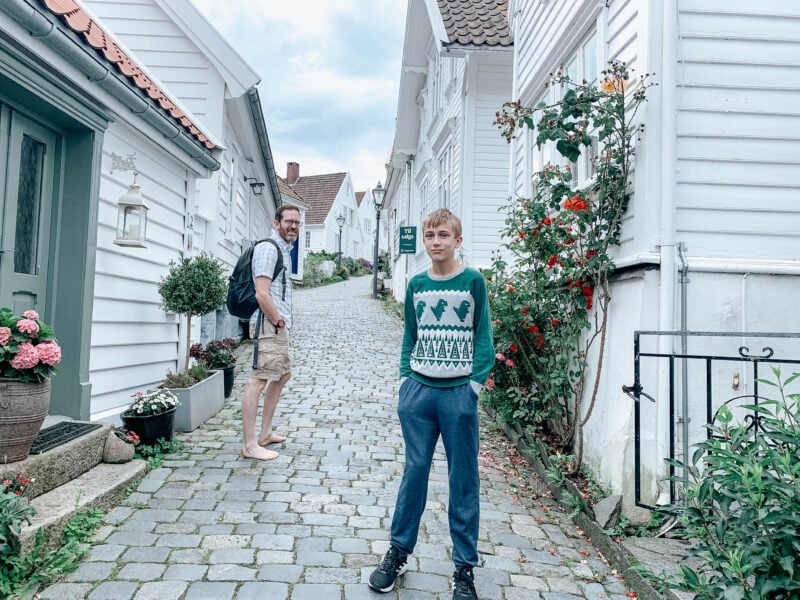
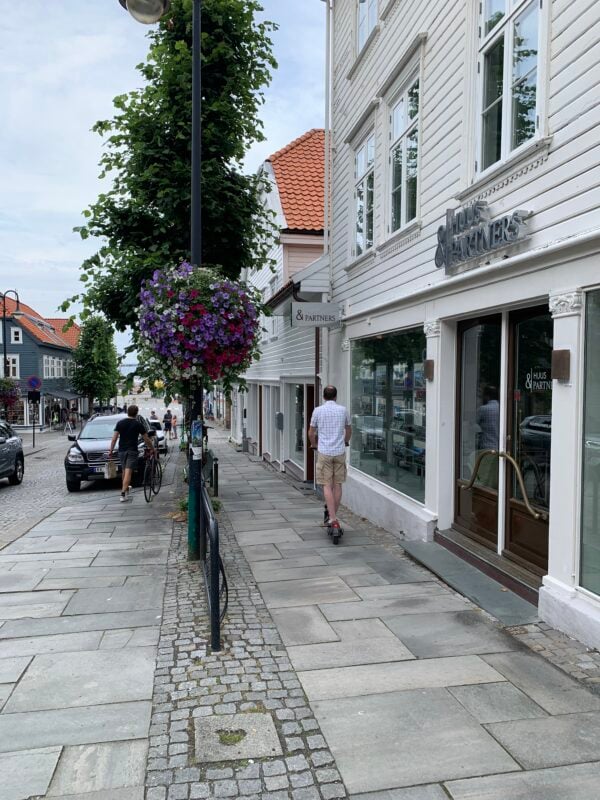
The old white houses are what made me fall in love with Stavanger. Gamle Stavanger, on the western side of the harbor, has 173 preserved wooden buildings dating from the 18th and 19th centuries. Its narrow streets and small houses give you a glimpse of Stavanger long before its modern oil industry.
These weren’t always the picturesque white homes you see today. Working families often lived in crowded conditions, sometimes with several families sharing a house. Many homes were painted red or yellow because white paint was more expensive.
One detail I love is that some people actually brought their houses with them when they moved here for work. The timber buildings could be dismantled, transported, and put back together. That makes the neighborhood’s history feel much more personal than simply knowing how old the buildings are.
We spent about an hour wandering, and I loved all of it. It felt like I had been picked up and put into the past. This is still a residential neighborhood, so enjoy the streets and take your photos while respecting the people who live here.
How long to allow: We spent about an hour exploring, without including a museum visit.
Try the Hands-On Exhibits at the Norwegian Canning Museum
A canning museum might not sound like an obvious family highlight, but this was fun for the kids and different from anything we had done before.
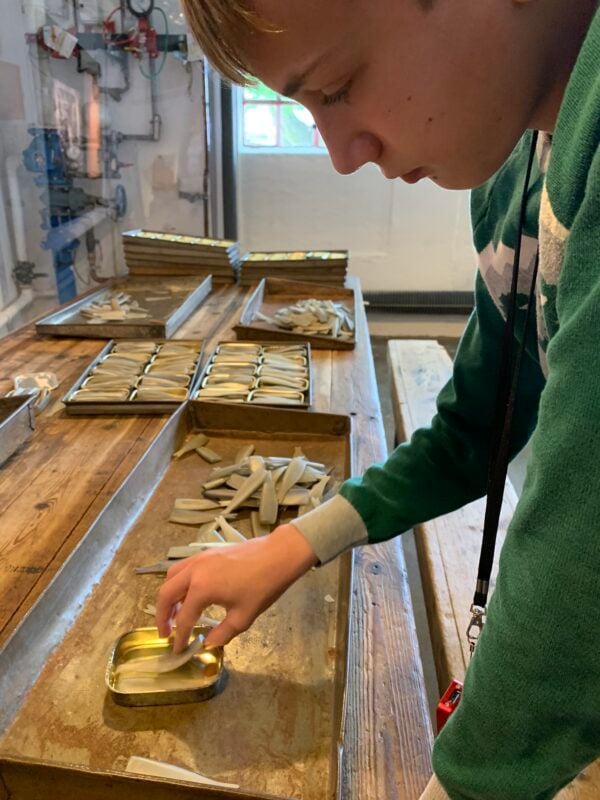
The Norwegian Canning Museum is in a former sardine cannery in Gamle Stavanger. It recreates the factory environment around the First World War and explains how fish went from the catch to finished tins ready for export. Norwegian canned sardines were once one of the country’s most important exports, and Stavanger had around 70 canneries.
I hadn’t realized how important sardines were before visiting. An interesting detail is that the fish sold as Norwegian sardines were often sprats, rather than the fish you might picture when you hear “sardine.”
What made the visit work so well for our family was how interactive it was. The kids learned how the machinery worked through clever demonstrations and fake fish they could handle. Instead of just looking at old equipment, they could try activities that helped them understand the production process.
The factory setting gives those activities a purpose: you’re learning how people prepared, smoked, and packed fish for a major local industry. It is an unusual subject for a museum, but that is part of what made it memorable.
The canning museum is part of IDDIS, which also houses the Norwegian Printing Museum. Its location makes it easy to combine with a walk through the old white houses.
Explore the Norwegian Petroleum Museum
photo credit: travels with the crew
The Norwegian Petroleum Museum explains an industry that helped transform Norway: offshore oil and gas. Through models, films, original equipment, and interactive exhibits, you can learn how oil forms, how it is found beneath the seabed, and what it takes to extract it.
That might sound technical, but we found the museum very entertaining for adults and children. The hands-on exhibits give kids something to do while adults can explore the engineering, working conditions, and the effect oil wealth has had on Norwegian life.
One memorable feature is the escape chute, which gives visitors a taste of how workers might evacuate an offshore platform. You can also explore a recreated drill floor to get a better sense of working on an oil rig. It makes the scale and challenges of offshore work easier to understand than simply reading about them.
We also really enjoyed the movie shown during our visit and learning about Norway’s oil wealth. That was part of what made the museum interesting to me: understanding how this industry changed the country we were traveling through.
The museum also addresses the climate challenges associated with oil and gas. There is more here than machinery, and I would recommend it even if petroleum isn’t a subject you would normally seek out on vacation.
Walk Along Fargegaten, Stavanger’s Colorful Street
Fargegaten is the nickname for the colorful stretch of Øvre Holmegate, where brightly painted buildings give central Stavanger a very different look from the white houses of Gamle Stavanger.
The colors are a relatively recent addition. In 2005, buildings in the eastern part of the street were painted using a color scheme developed by artist Craig Flannagan. The project helped bring new life to the area, which has shops, cafés, and galleries.
We visited while exploring the city, window-shopping, and wandering wherever something caught our attention. I can’t give you an exact account of what we did on each street, but that was part of the enjoyment of Stavanger. We didn’t need every minute planned.
Make time to walk through Fargegaten, enjoy the buildings, and explore the surrounding streets. It is an easy addition to a day around the harbor and the Norwegian Petroleum Museum.
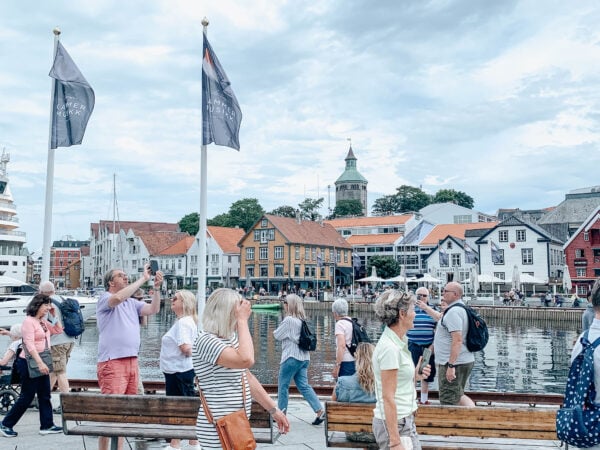
I spent time at the harbor looking at the enormous cruise ships and watching other boats come and go. There is something entertaining about sitting near the water with so much activity around you.
Our Scandic hotel wasn’t far from the harbor, so it was easy to return to this part of the city while we explored. I liked having the waterfront close by rather than making it a separate outing.
Take a Lysefjord Cruise from Stavanger
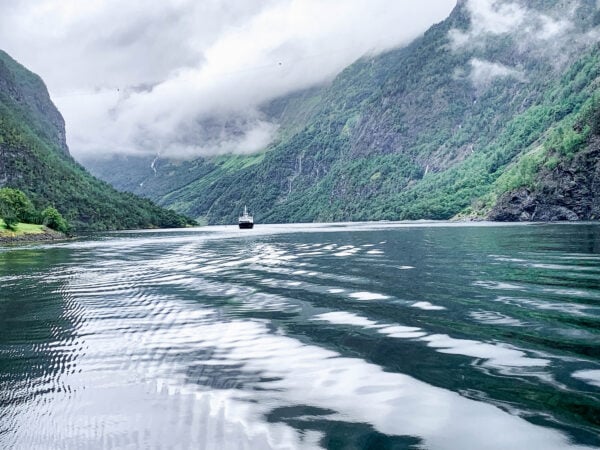
We focused our two days on Stavanger itself, but a Lysefjord cruise is an option if you want to see the surrounding fjord scenery without committing to a hike.
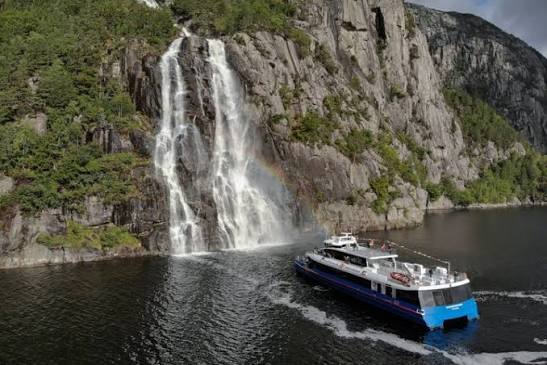
Sightseeing cruises depart from central Stavanger and travel into the fjord, where steep rock walls rise above the water. Depending on the trip, you can see Preikestolen from below and pass waterfalls along the way. Seeing Pulpit Rock from the water is a different experience from standing on top, so check the itinerary before booking.
A cruise can fit into a city stay without moving hotels. Just leave enough time for the sailing rather than treating it as a quick harbor boat ride.
We didn’t take this excursion, so check the operator’s current route, duration, and departure times when planning your visit.
Hike to Preikestolen, or Pulpit Rock
Preikestolen is the enormous rock plateau that appears in so many photographs of Norway, rising 604 meters above the Lysefjord. It is one of the best-known excursions from Stavanger, but it requires more planning and effort than the sights in the city center.
The standard hike is approximately eight kilometers round trip, with around 500 meters of elevation gain. Allow roughly four to five hours for the hike itself, plus transportation, breaks, and time at the viewpoint. This is a mountain hike over uneven ground, rather than a short walk to a viewing platform.
If it is a priority for you, set aside a separate day rather than trying to squeeze it between museums. Check current trail conditions, wear suitable hiking footwear, and choose a guided trip if you need help assessing the route or seasonal conditions.
If hiking isn’t part of your plans, a Lysefjord cruise offers another way to appreciate the landscape. We stayed in the city and still found plenty to fill our two days.
Step Inside Stavanger Cathedral
Stavanger Cathedral adds a much older layer to the city’s history. Traditionally dated to around 1125, the medieval church combines Romanesque architecture with a Gothic chancel added after a fire in 1272. It is close to the harbor, making it easy to include while exploring the center.
We went inside and looked around, but I’ll be honest: it wasn’t a highlight for me. If you love historic churches, you may appreciate it more than I did. I was glad to see it, but the old white houses and Stavanger’s unusual museums made a stronger impression.
See the Swords in Rock Monument
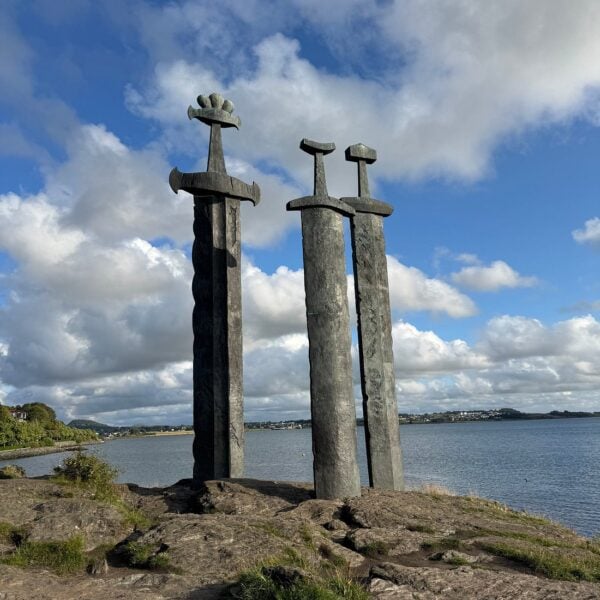
Swords in Rock, or Sverd i fjell, was cooler to me than the cathedral—and my kids were excited because it reminded them of the sword in the stone.
The monument consists of three enormous swords set into the rock beside Hafrsfjord. Created by sculptor Fritz Røed and unveiled in 1983, it commemorates the Battle of Hafrsfjord, traditionally dated to 872 and associated with Harald Fairhair’s unification of Norway.
The swords are a modern memorial, rather than Viking artifacts, but knowing the history gives the setting more meaning. My kids’ first reaction was to “The Sword in the Stone”, which made it an easy way to get them interested.
This sight is outside the central harbor area, so plan it as a separate outing rather than another stop on your old-town walk.
Look for Stavanger’s Street Art
photo credit: travels with the crew
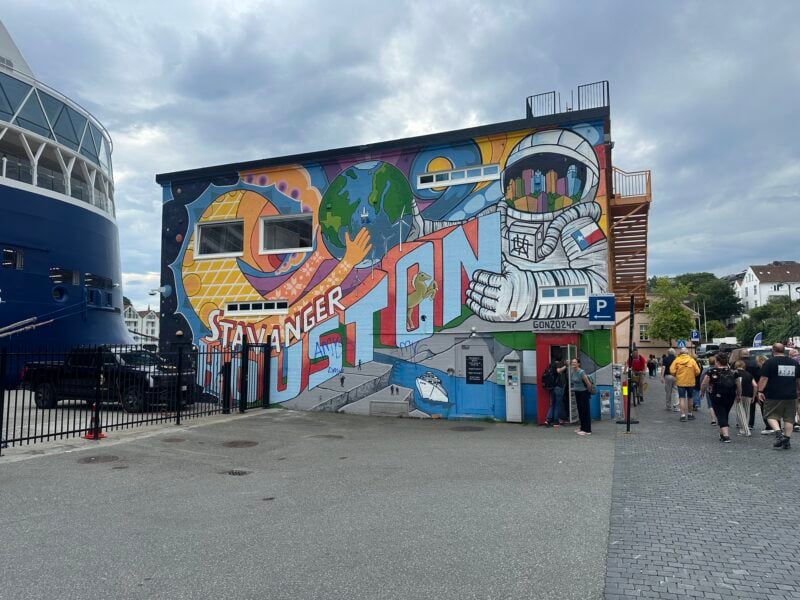
Stavanger’s street art is beautiful. I loved the color it brings to the city, especially as a contrast to the white houses and quieter colors elsewhere.
The city’s connection with street art owes much to Nuart, whose festival has brought artists and public artworks to Stavanger over the years. That means the art is part of the city itself: you encounter it on buildings while exploring, rather than having to enter a gallery.
We enjoyed seeing it as we wandered. You don’t need to recognize the artists to appreciate the murals, but if you want the background behind the work, look into a Nuart street-art walking tour.
Leave time to notice what is around you between the bigger attractions. Some of the enjoyment of Stavanger is simply exploring its different sides.
How Many Days Do You Need in Stavanger?
Two days was perfect for our city-focused visit. We had time for the old white houses, museums, cathedral, street art, and harbor without feeling like we were constantly rushing.
If you want to add a Lysefjord cruise or hike to Preikestolen, allow extra time. Those excursions need space in your itinerary rather than being squeezed between city attractions.
Where We Stayed in Stavanger
We stayed at a Scandic near the harbor, at Scandic Stavanger City, and I loved it.
I love a Scandic in general: I find them reasonably priced, and although the rooms aren’t spacious, we’ve found room options that accommodate our whole family.
The huge breakfast buffet is another reason my family enjoys staying at Scandic. There is plenty to choose from, and it is something we look forward to before heading out for the day.
Being near the harbor worked well for us. It made it easy to explore central Stavanger and return to the waterfront throughout our stay.
A Suggested Two-Day Stavanger Itinerary
Two days was perfect for our city-focused visit. This is a suggested way to group the places we visited, rather than the exact order we followed.
Day One: Old Stavanger, the Canning Museum, and the Harbor
Start with a walk through Gamle Stavanger. We spent about an hour among the old white houses, and this was my favorite part of the city.
Visit the Norwegian Canning Museum while you’re in the neighborhood. Its interactive exhibits give you a different perspective on the city after walking past the homes where working families once lived.
Leave time for lunch and an unhurried afternoon around the harbor and central streets. Watch the boats, look in the shops, and stop at Stavanger Cathedral if you want to see inside.
Day Two: The Petroleum Museum, Fargegaten, and Swords in Rock
Begin with the Norwegian Petroleum Museum, leaving enough time for the interactive exhibits and a film. We found plenty to interest both adults and children.
Afterward, explore Fargegaten and the surrounding streets, keeping an eye out for street art as you go. Have lunch before heading out to Swords in Rock at Hafrsfjord.
Swords in Rock is outside the central sightseeing area, so allow for transportation rather than treating it as another nearby walking stop. Return to the center afterward for dinner or more time by the water.
Adding a Fjord Cruise or Hike
If a Lysefjord cruise is a priority, replace part of the city itinerary with your chosen sailing or add another day.
For Preikestolen, I would allow a separate day for transportation and the hike. We didn’t do either excursion and still enjoyed two full days in Stavanger, so you don’t have to hike to make a visit worthwhile.
Getting to Stavanger
If you are flying into Stavanger Airport, the airport bus takes approximately 20–30 minutes to reach Stavanger. You can check stops and buy tickets through Flybussen. Choose a stop near your hotel so you aren’t dragging your luggage farther than necessary.
Getting Around Stavanger
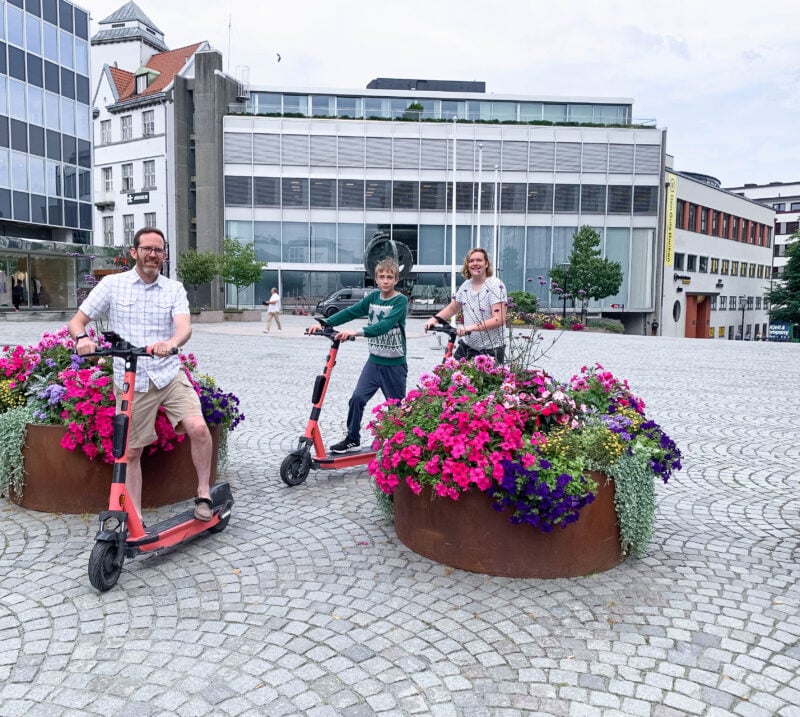
You can explore much of central Stavanger on foot. The harbor, old town, colorful Fargegaten, and museums fit nicely into a couple of days without needing to drive between every stop. We also rode scooters around and enjoyed window shopping along the way.
Swords in Rock is farther from the center, so plan transportation separately. You can take bus 16 from central Stavanger to the Madlastø stop. Check the current timetable before heading out.
For a visit focused on the city, I wouldn’t rent a car just to get between the main sights. If you are continuing on a Norway road trip, that is a different story!
When to Visit Stavanger
We visited Stavanger in August as part of our Norway road trip. For a first visit, I would choose summer, especially if you want to combine exploring the city with a fjord cruise or other outdoor activities. The long daylight hours give you plenty of time to wander.
But summer doesn’t mean you can leave your rain jacket at home! This is coastal Norway, and sunshine can turn into rain and wind. Bring layers, comfortable walking shoes, and a waterproof jacket.
If your plans revolve around the museums, shops, and old town, Stavanger can also work outside summer. Just check attraction hours and excursion schedules for your dates. You can save the museums for a rainy stretch and explore the white wooden houses when the weather clears.
There may be affiliate links in this post. Read my disclosure policy to learn more.











Leave a Comment