When we decided to spend spring break in Belgium, the question I heard over and over again was, “Why Belgium?”
And after visiting, I think the better question is: why aren’t more people going?
Belgium doesn’t have an Eiffel Tower or a Colosseum pulling millions of travelers across the border. Instead, you’ll find cobblestone streets, medieval castles, beautiful town squares, canals, incredible churches, and more chocolate and waffles than anyone reasonably needs.
I’ve traveled extensively in neighboring France and the Netherlands and love them both, but Belgium felt different. It was easier to explore, often less crowded, and still gave us everything I want from a European trip: beautiful cities, great food, interesting history, and plenty to do.
If Belgium has never made it onto your Europe bucket list, it should. Here are the reasons I think Belgium is absolutely worth visiting.
Is Belgium Worth Visiting?
Yes. Belgium is absolutely worth visiting, especially if you love historic European cities, beautiful architecture, great food, and destinations that are easy to explore by train.
Best for: City breaks, history, architecture, food, chocolate, beer, and Christmas markets
Don’t miss: Bruges, Ghent, and Brussels
Biggest surprise: Ghent
Prettiest city: Bruges
How long to stay: 4–7 days gives you enough time to experience several Belgian cities without rushing.
Why I loved it: Belgium gave us the beautiful old-world Europe we were looking for without feeling like we were simply repeating trips we’d already taken to France or the Netherlands.
Bruges
Photo Credit: Travels With The Crew
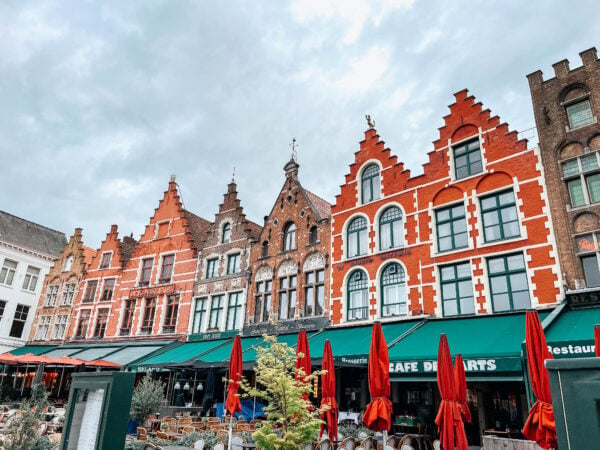
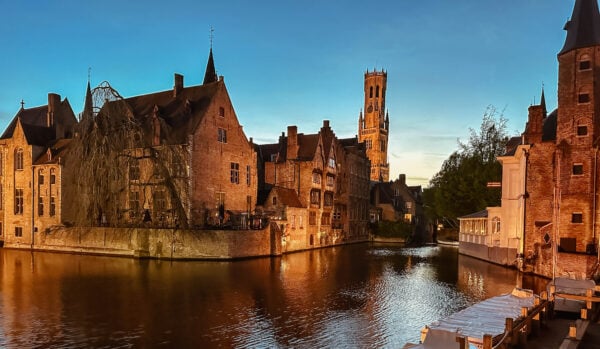
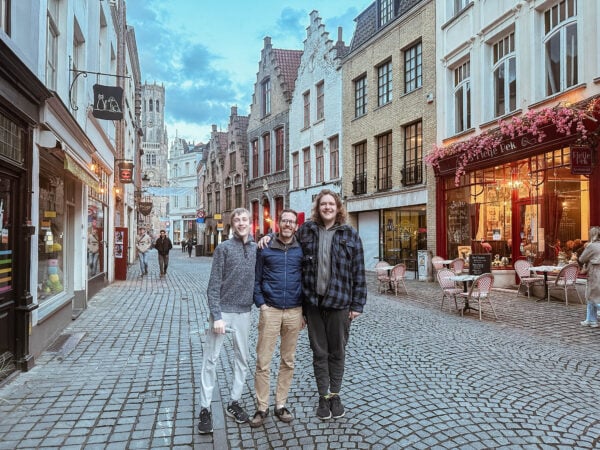
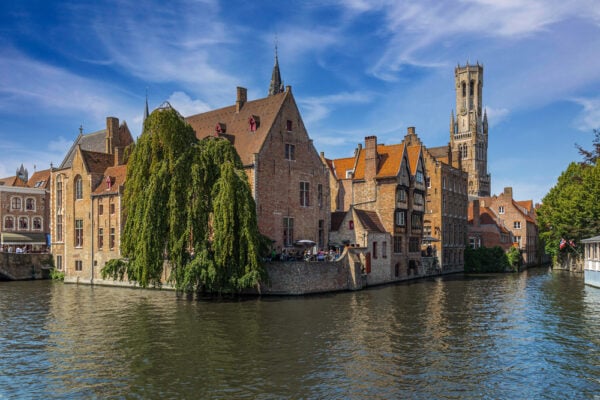
If you haven’t heard of Bruges (or Brugge in Dutch), put it on your list. Bruges was the most touristy place we visited in Belgium, but there is a reason for that: Bruges is simply beautiful.
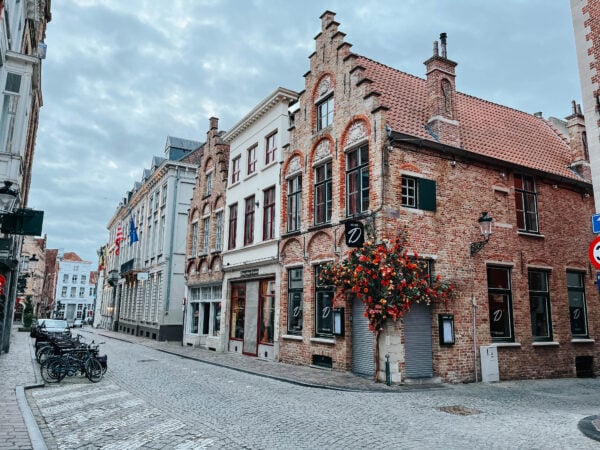
The entire historic center is a UNESCO World Heritage Site, filled with cobblestone streets, medieval buildings, canals, and beautiful squares. It is compact enough that one of the best things to do is simply walk and see what you find.
Markt, the main market square, is surrounded by colorful historic buildings, restaurants, and cafés and dominated by the Belfry. When we visited, there was even a market taking place in the square.
5 Things to Do in Bruges
Photo Credit: Travels With The Crew
1. Explore the historic center. Walk through Markt and Burg Square and wander the streets around the canals. If you’re up for it, climb the 366 steps of the Belfry for views over Bruges.
2. Take a canal cruise. Bruges is one of those cities that looks completely different from the water. A boat ride takes you beneath old bridges and past buildings and gardens you won’t see as well from the streets.
3. See the Flemish art. Bruges was an important center for the Flemish Primitives, and you can still see works created during the city’s artistic heyday in its museums and historic buildings.
4. Eat chocolate and try Belgian beer. There are chocolate shops seemingly everywhere in Bruges, along with plenty of places to try Belgian beer. Don’t turn this into a checklist—stop somewhere that looks good and enjoy it.
5. Walk through Minnewater. Minnewater, often called the Lake of Love, gives you a quieter side of Bruges away from the busiest streets around Markt. It’s a pretty place for a walk, especially after you’ve spent several hours sightseeing.
Ghent
Photo Credit: Travels With The Crew
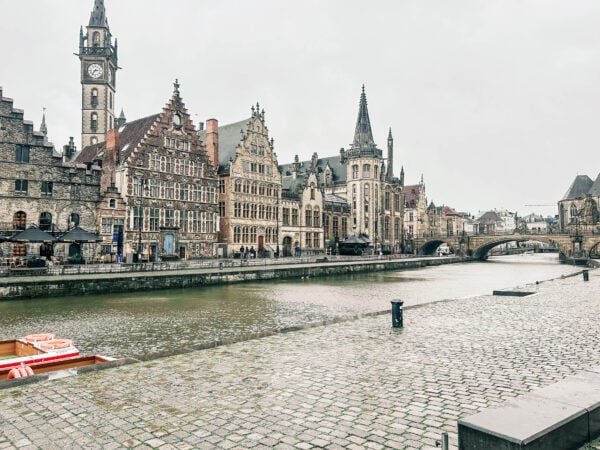
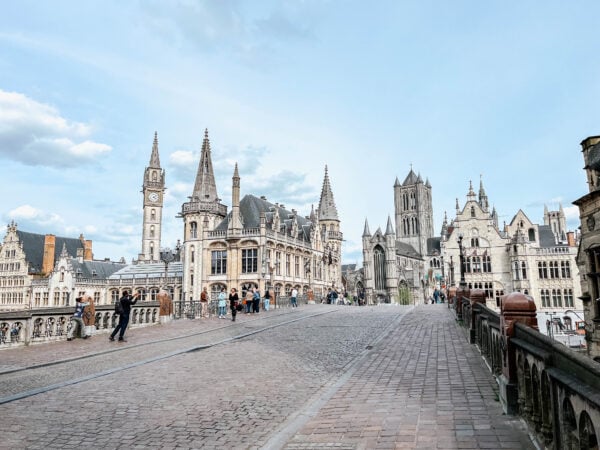
Ghent surprised me. It has the canals, churches, and medieval architecture you hope to find in Belgium, but unlike Bruges, it also feels like a modern city where people actually live and work.
It’s also very centrally located, making it a good base if you want to explore several Belgian cities by train.
5 Things to Do in Ghent
Photo Credit: Travels With The Crew
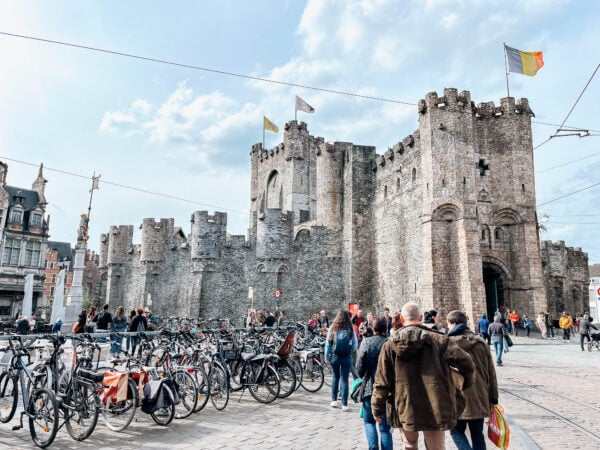
1. Visit Gravensteen Castle. The Castle of the Counts is a medieval castle right in the center of Ghent. You can explore the castle and ramparts and get some great views over the historic city.
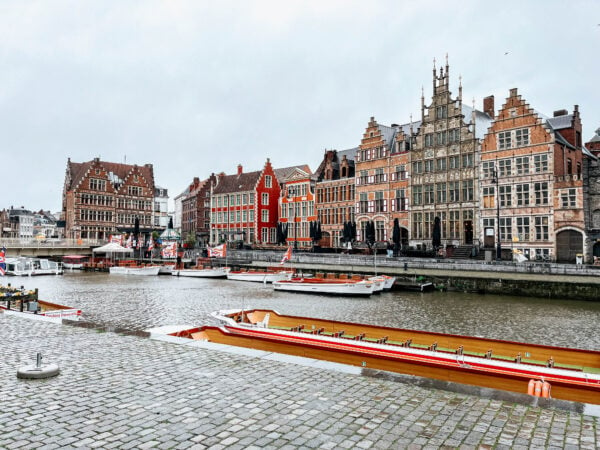
2. Walk along the Graslei and Korenlei. These historic quays along the River Lys were once at the center of Ghent’s medieval port and grain trade. Today, the beautiful old buildings lining the water make this one of the prettiest places in the city.
3. Visit St. Bavo’s Cathedral and see the Ghent Altarpiece. I’d combine these two entries from your original list because they’re in the same place. St. Bavo’s Cathedral is home to the famous Adoration of the Mystic Lamb, completed by the Van Eyck brothers in 1432 and considered one of the most influential works of Western art.
4. Take a canal cruise. We took canal cruises in several Belgian cities, and Ghent’s was my favorite. The cruise takes you through the medieval center while explaining the history of the buildings and old guilds along the water. It’s also an easy way to see quite a bit of the city without spending the entire day walking.
5. Spend some time simply exploring the historic center. Don’t rush from attraction to attraction. Ghent is especially beautiful around the canals, bridges, churches, and old guild houses, and some of our favorite parts were simply walking through
Brussels
Photo Credit: Travels With The Crew
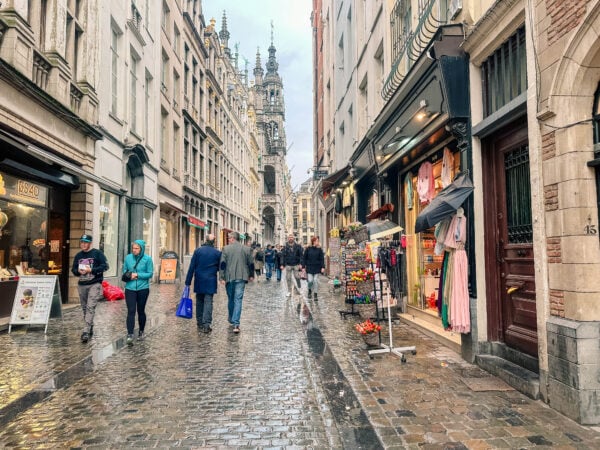
I wasn’t sure what to expect from Brussels, but we ended up really enjoying it. We spent a lot of our time simply wandering the streets, looking at the architecture, stopping in shops, and enjoying the atmosphere.
And then there was the chocolate.
There seemed to be a chocolate shop everywhere we looked, and my husband apparently took that as a personal challenge to visit every single one. Belgium is famous for its chocolate, but you don’t really appreciate just how serious they are about it until you’re surrounded by shops filled with beautiful chocolates and pralines.
We also had to find Manneken Pis, the tiny bronze statue of a little boy peeing into a fountain. It’s one of Brussels’ most famous landmarks, which makes seeing just how small it actually is pretty funny. We laughed, took the obligatory pictures, and moved on.
5 Things to Do in Brussels
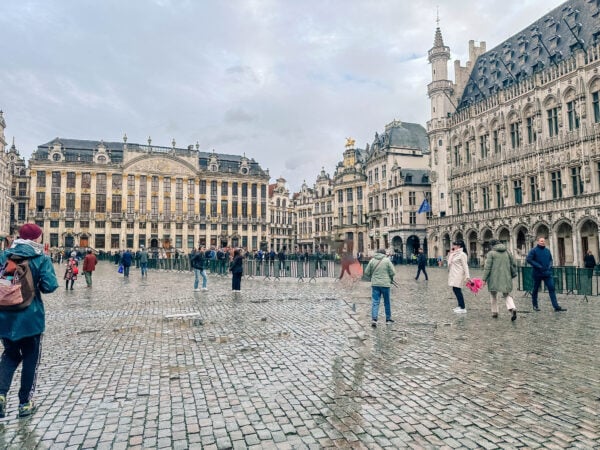
1. See Grand Place. This is the Brussels you picture before you arrive. The enormous central square is surrounded by elaborate historic buildings, and it’s worth seeing both during the day and when everything is illuminated at night.
2. Go chocolate shop hopping. Don’t just buy a box at the first store you see. Wander around, try a few different chocolatiers, and make tasting Belgian chocolate part of the experience. This ended up being one of the most fun parts of Brussels for us.
3. Find Manneken Pis. Yes, he’s tiny. Yes, it’s slightly ridiculous that he’s one of the city’s most famous attractions. And yes, you should go see him anyway.
4. Wander the historic center. You don’t need an attraction scheduled for every hour in Brussels. Some of our favorite time was spent walking through the streets around Grand Place, looking at buildings and shops and seeing what we stumbled across.
5. See the Atomium. The enormous silver structure built for the 1958 World’s Fair looks completely different from the historic center of Brussels. You can see it from outside or go inside and explore its interconnected spheres.
Antwerp
Antwerp was probably my least favorite of the Belgian cities we visited, but that doesn’t mean I didn’t like it. It just felt much bigger than Bruges or Ghent, and I don’t think our single day there was enough time to really get to know the city.
The historic center is beautiful, with elaborate architecture and a gorgeous main square, but once you move beyond it, Antwerp feels like the large city it is. If I were planning the trip again, I’d either give Antwerp more than one day or go in knowing that I wasn’t going to see everything.
5 Things to Do in Antwerp
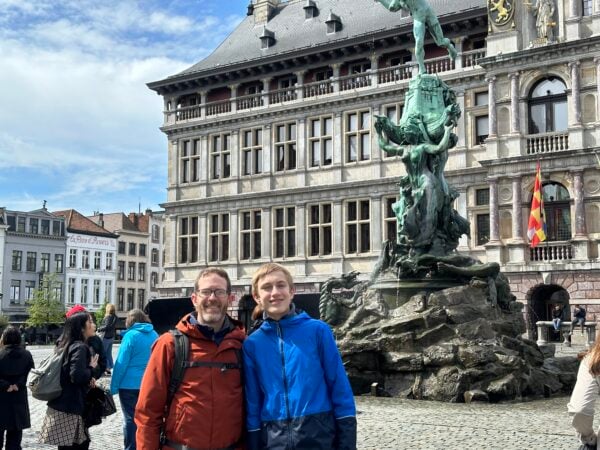
1. Explore the historic center. Spend some time around Grote Markt and the surrounding streets. This was the part of Antwerp I enjoyed most, and there is plenty of beautiful architecture to see without having a specific destination in mind.
2. See the Cathedral of Our Lady. The cathedral dominates Antwerp’s historic center and is worth seeing for both its Gothic architecture and its collection of works by Peter Paul Rubens.
3. Visit the Museum of Illusions. We had drizzle the morning we visited Antwerp, so the Museum of Illusions ended up being a great rainy-day activity. It’s interactive, fun, and a nice break from churches and historic buildings, especially if you’re visiting Belgium with kids or teens.
4. See Antwerp Central Station. Even if you’re only passing through by train, take a few minutes to actually look at the station. It’s enormous and ornate enough that arriving by train feels a little like you’ve already reached your first attraction.
5. Give yourself time to wander. We spent quite a bit of our day walking around and looking at the architecture. Antwerp is large enough that I wouldn’t try to cram every major attraction into a single day.
Dinant
Photo Credit: Travels With The Crew
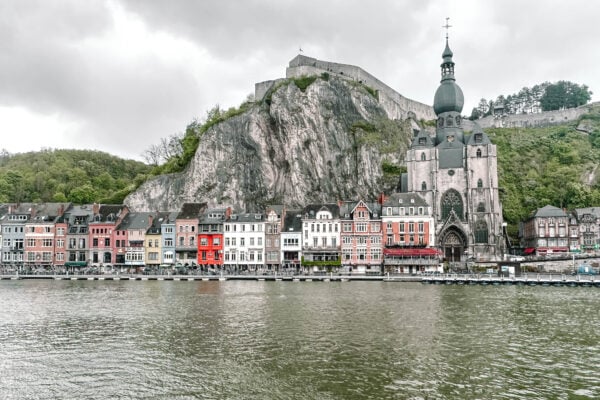
Dinant was completely different from the other Belgian cities we visited. Located in Wallonia in southern Belgium, it was the one place on our trip where the French-speaking side of the country really came to the forefront.
It’s also much smaller than Brussels, Ghent, or Antwerp. The town stretches along the Meuse River beneath steep cliffs, with the enormous Collegiate Church of Notre-Dame de Dinant dominating the center.
Things to Do in Dinant
See the saxophones. Dinant is the birthplace of Adolphe Sax, inventor of the saxophone, and the town has embraced that history. Colorful saxophone sculptures are scattered around town, including a collection lining the Charles de Gaulle Bridge. Finding them as you walk around is part of the fun.
Visit the Collegiate Church of Notre-Dame. The church is impossible to miss and looks enormous compared with the small town around it. Go inside even if you’ve already seen plenty of churches in Belgium. We enjoyed learning more about the history of Dinant and the surrounding area while we were there.
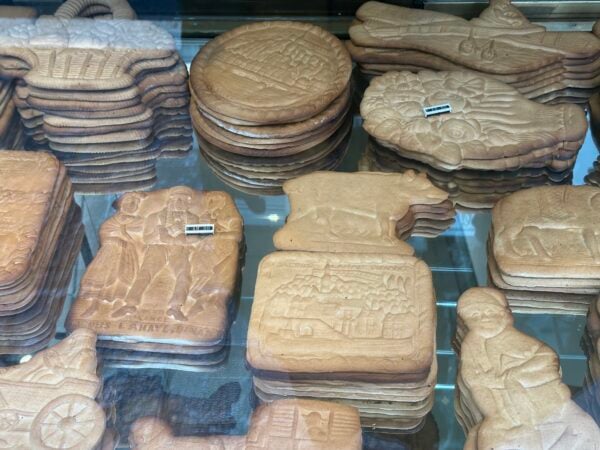
Try a Couque de Dinant. One of our favorite discoveries was the traditional local cookie. Couques de Dinant are made using carved molds that leave elaborate designs pressed into the surface. They’re also famously hard, so they’re definitely not your typical soft cookie—but trying one is part of visiting Dinant.
Walk along the Meuse. Dinant is small enough that you don’t need a huge sightseeing itinerary. Walk along the river, cross the bridge, look at the architecture, and enjoy being somewhere that feels quite different from Belgium’s larger cities.
Why is Belgium Worth Visiting?
Photo Credit: Travels With The Crew
The Food Alone Is a Reason to Visit Belgium
Belgium takes some of its most delicious foods very seriously. Chocolate, waffles, fries, beer—these aren’t just things tourists eat because they’re in Belgium. They’re a real part of the experience.
Chocolate was probably the most noticeable for us. In Brussels especially, it felt like there was another beautiful chocolate shop every few doors. My husband wanted to go into practically all of them, so we sampled plenty along the way.
Belgian waffles are another must, but you’ll find more than one style. Brussels waffles are generally light and rectangular, while Liège waffles are denser, sweeter, and often eaten without much added to them.
And then there are the fries. You’ll see friteries throughout Belgium serving cones of hot fries with an almost ridiculous selection of sauces.
Belgium is also famous for its beer, with brewing traditions that go back centuries. Even if you aren’t particularly interested in beer, it’s hard to visit Belgium without noticing how much a part of the country’s food culture it is.
The Architecture Is Incredible
Photo Credit: Travels with the Crew
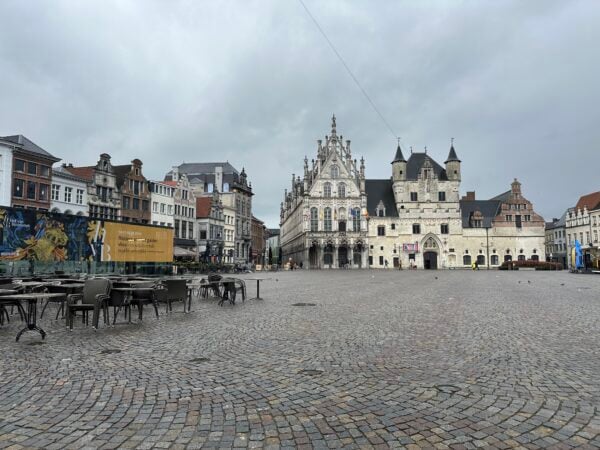
One of my favorite things about Belgium was simply walking around and looking at the buildings. You don’t necessarily need to be heading toward an attraction because the streets themselves are often the attraction.
Bruges is filled with medieval buildings and cobblestone streets, while Ghent has enormous churches, old guild houses, and a medieval castle right in the middle of the city. Brussels has the incredibly ornate buildings surrounding Grand Place, and even Antwerp’s train station feels grand enough to be a tourist attraction.
The churches were especially impressive. We saw so many during our trip that you might think we’d eventually get tired of walking into them, but we didn’t. Each one seemed to have something different to see.
That’s one of the things I liked most about Belgium. There isn’t one single landmark that defines the country. Instead, beautiful architecture is everywhere you go, and sometimes the best part of the day is simply wandering around and looking up.
Getting Around Belgium Is Surprisingly Easy
Photo Credit: Depositphotos
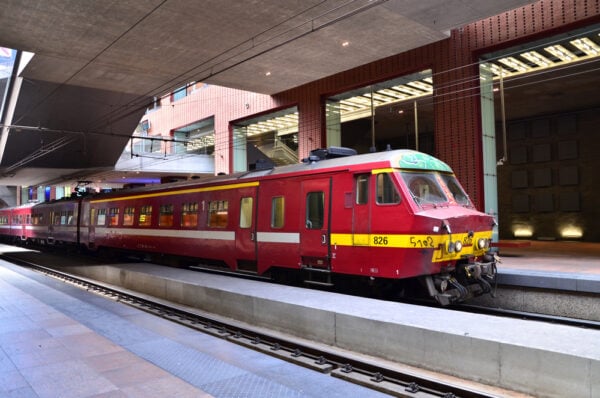
One of the things that made Belgium such an easy trip was how simple it was to travel between cities. Belgium is a relatively small country, and many of the places you’ll want to visit are connected by train. You can drive and do just as well, but you do spend some precious time in traffic in the larger cities.
We were able to visit several very different cities without spending hours getting from one place to another. Ghent is particularly well positioned between Bruges, Brussels, and Antwerp, making it a good base if you don’t want to change hotels constantly.
Once you arrive, the historic centers of Bruges, Ghent, Brussels, and Dinant are also very walkable. We spent a huge amount of our trip simply walking from place to place.
If you want a European vacation where you can experience several cities without renting a car or losing half your trip to travel days, Belgium is a really good choice.
There Is a Lot of History Packed Into a Small Country
Photot Credit: Travels with The Crew
Belgium may be small, but there is history everywhere you look. Medieval castles, enormous Gothic churches, old guild houses, historic town squares, and centuries-old canals are woven into cities that are still very much alive today.
In Ghent, you can walk through a 12th-century castle and then see the famous Ghent Altarpiece inside St. Bavo’s Cathedral. Bruges feels like you’ve stepped into a medieval city, while Brussels’ Grand Place is surrounded by elaborate historic buildings.
Belgium also played an important role in both World Wars, particularly in the Flanders region. If you’re interested in military history, you could easily add battlefields, memorials, and museums to a Belgium itinerary.
What I liked was that we didn’t have to seek out history constantly. It was simply part of almost everywhere we went.
Belgium Is Easy to Overlook—and That’s Part of Its Appeal
Photo Credit: Travels With The Crew
Belgium is surrounded by some of Europe’s biggest tourist destinations. France, the Netherlands, Germany, and the United Kingdom are all nearby, and I think that is part of the reason so many travelers overlook it.
Before our trip, people genuinely seemed confused when I told them we were spending spring break in Belgium. After visiting, I couldn’t understand why.
We found beautiful cities, incredible architecture, great food, fascinating history, and plenty to do, without feeling like we were simply recreating a trip we’d already taken somewhere else in Europe.
Belgium isn’t completely undiscovered—Bruges certainly gets its share of tourists—but much of the country felt less overwhelming than Europe’s biggest destinations. And I liked that.
Sometimes the best trips are to the places you weren’t sure you needed to visit in the first place.
Belgium Travel FAQ
Photo Credit: Depositphotos
Is Belgium worth visiting?
Yes. Belgium is especially worth visiting if you enjoy historic cities, beautiful architecture, great food, art, and destinations that are easy to explore without a car. It also works well for travelers who have already visited some of Europe’s bigger destinations and want somewhere a little different.
How many days do you need in Belgium?
I would plan at least four days in Belgium, although a week is even better. With four days, you could comfortably see Brussels plus Bruges and Ghent. With a week, you have time to add Antwerp, Dinant, or other parts of the country without rushing from city to city.
What is the best city to visit in Belgium?
For a first trip, I would choose Bruges or Ghent. Bruges is the prettiest and has the storybook European atmosphere many visitors are looking for, while Ghent feels more like a real, lived-in city while still having canals, medieval architecture, and plenty to see.
Brussels is also worth visiting, especially if you love architecture, chocolate, museums, and simply wandering around a European city.
Is Belgium easy to travel around without a car?
Yes. Belgium is one of the easier European countries to explore by train. Brussels, Bruges, Ghent, and Antwerp are well connected, and you can easily visit several cities during the same trip without renting a car.
We did a lot of walking once we reached each city, which made getting around even easier.
Is Belgium expensive to visit?
Belgium isn’t necessarily a budget destination, but costs can vary considerably depending on where you stay and how you travel. Hotels in popular destinations such as Bruges and Brussels can be expensive, but traveling between cities by train and spending much of your time walking can help keep transportation costs down.
There may be affiliate links in this post. Read my disclosure policy to learn more.








Leave a Comment