Traveling with a car seat is one of the least fun parts of traveling with small kids. They’re bulky, awkward to carry through an airport, and somehow you’re usually trying to manage one while also juggling luggage, a stroller, and an actual child.
But if you’re renting a car or driving once you reach your destination, you still need an appropriate car seat for your child.
That’s where a good travel car seat can make a huge difference.
When my kids were younger, I researched portable car seats specifically because I wanted options that were safe for the car but didn’t feel like hauling another piece of luggage through the airport. Some travel car seats are simply lightweight versions of traditional seats, while others fold small enough to carry much more easily.
Below are some of the best portable car seats for travel, including options for babies, toddlers, and older kids who still need a booster.
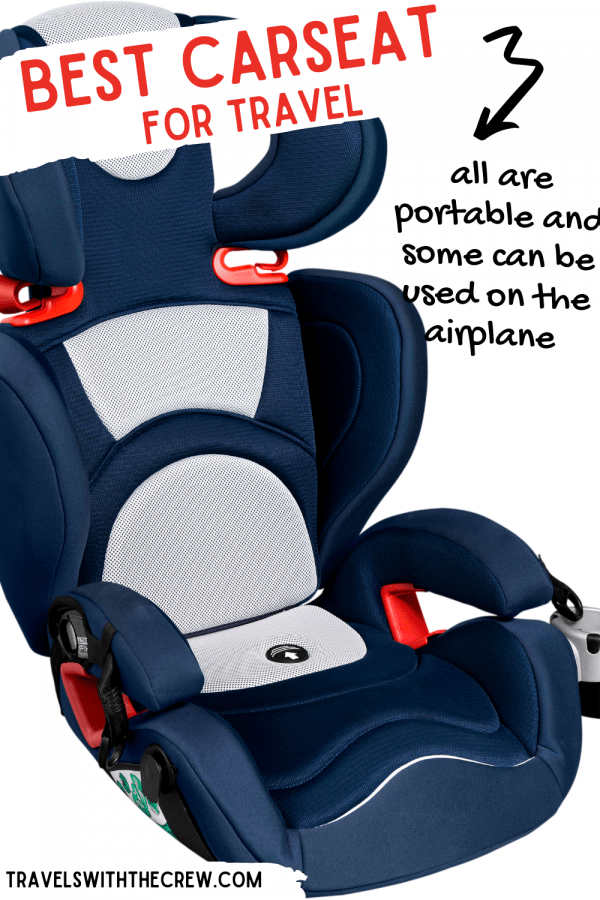
Best Travel Car Seats at a Glance
Traveling with a car seat is never going to be the easiest part of a family vacation, but choosing a lighter, more portable seat can make a huge difference. Here are my top picks depending on your child’s age and how you travel:
Best Budget Travel Car Seat: Cosco Scenera Extend
Best Convertible Travel Car Seat: Graco Contender Slim
Best Folding Travel Car Seat: WAYB Pico
Best Lightweight Infant Car Seat: Nuna PIPA aire
Best Car Seat/Stroller Combo: Doona
Best High-Back Travel Booster: Hifold Fit-and-Fold
Best Ultra-Compact Booster: Mifold Grab-and-Go
Quick tip: The best travel car seat isn’t necessarily the smallest one. Choose a seat that’s appropriate for your child’s age, height and weight, and then look for the lightest, easiest-to-carry option that works for the way you travel.
The Cosco Scenera Extend is a great choice if you want a travel car seat without spending a fortune. It has a lightweight, compact design and can be used rear-facing from 5–40 pounds and forward-facing from 30–50 pounds. It’s also certified for use on an aircraft.
I particularly like this one for travel because it’s simple. The cover is machine washable and dryer safe, the cup holder can go in the dishwasher, and the narrow design takes up less room in a rental car. Plus its about the cheapest car seat for baby on this list.
Best for: Budget-friendly family travel and flying Downside: It doesn’t have all the extra padding and convenience features you’ll find on more expensive seats.
The Graco Contender Slim is a good option if you want one travel car seat that can last through several stages. It works rear-facing from 5–40 pounds and forward-facing from 26.5–65 pounds, so its upper weight limit is higher than the Cosco.
It’s also certified for aircraft use and has a slim design that’s useful when you’re dealing with rental cars or trying to fit multiple kids across a back seat. The downside for travel is the weight: at 16 pounds, it’s considerably heavier than some of the truly lightweight options.
Best for: Families who want a convertible seat with a longer useful life Downside: At 16 pounds, you probably won’t enjoy carrying it through a huge airport. If it were me, I would only use it if my husband could carry it!
The WAYB Pico was designed specifically for travel, and that’s obvious when you compare it with a traditional car seat. It weighs just 8 pounds and folds small enough to fit in most airplane overhead bins. It’s also certified for use on an airplane.
The biggest limitation is that it’s forward-facing only. Current Pico seats are for children ages 2+ who are 26.5–50 pounds and 33.5–45 inches tall. If you travel a lot this is the one for you, it is more expensive than some but the foldability makes it so nice for travel through the airport.
Best for: Flying and frequent travelers Downside: It’s expensive and only works for a relatively limited size range.
The Nuna PIPA Aire is my pick for families traveling with an infant because it’s exceptionally lightweight. At about 6 pounds without the canopy and inserts, it’s much easier to carry through an airport than many infant car seats.
It can also be installed without its base, which is especially helpful when you’re using rental cars or taxis. Plus you can push it through the airport like a stroller with the base and then gate check the stroller base and keep the car seat on the flight. I like this one for parents who want a premium everyday infant seat that also works really well for travel.
Best for: Traveling with babies without lugging anything extra Downside: It’s an infant-only seat, so your child will eventually outgrow it.
The Doona solves one of the biggest problems with traveling with a baby: it combines your infant car seat and stroller into one piece of gear. The wheels fold underneath the seat when you’re using it in the car and pop back out when you’re ready to use it as a stroller.
It weighs 17.2 pounds, so it’s certainly not lightweight, but you aren’t carrying a separate stroller through the airport. It’s rear-facing for babies from 4–30 pounds and up to 32 inches and is approved for aircraft travel.
Best for: Airports, cities, taxis and trips with an infant Downside: It’s heavy if you actually have to carry it.
The Hifold Fit-and-Fold is a great travel option once your child is old enough for a booster. Instead of carrying a bulky traditional high-back booster, the Hifold folds down into a much smaller package that can fit into your luggage or rental car more easily.
It’s designed for children ages 4+ who meet its height and weight requirements. One important distinction: like other belt-positioning boosters, the Hifold is for use in the car at your destination, not as a child restraint during the flight itself.
Best for: Older kids who still need a high-back booster Downside: At around 10 pounds, it’s compact but not especially light.
The Mifold Comfort Grab-and-Go is the smallest option on this list and one I’d consider for older kids when packing space really matters. Instead of lifting your child higher like a traditional booster, it positions the vehicle’s seat belt correctly across the child.
It weighs just 1.75 pounds and folds to about 9.4 × 4.7 × 2 inches, so you can put it in a backpack or even a glove compartment. The current model is designed for children ages 4+, 40–100 pounds, and 43.5–59 inches tall.
Best for: Rental cars, taxis, carpools, and traveling light Downside: It’s a backless booster, so it isn’t appropriate for younger children and can’t be used as a child restraint on the airplane.
Can You Use a Travel Car Seat on an Airplane?
Yes, but not every travel car seat can be used on an airplane.
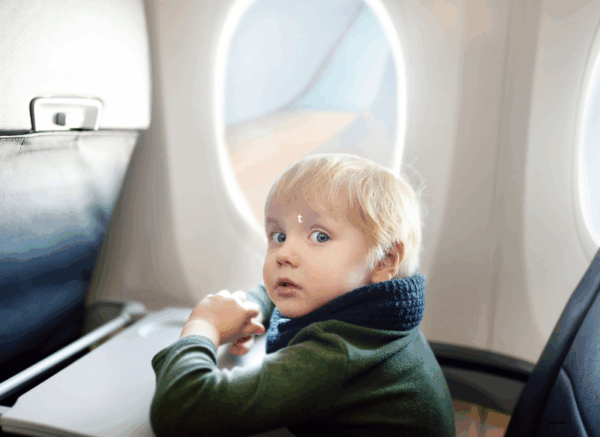
If you want your child to sit in their car seat during the flight, look for the label stating that the restraint is certified for use in motor vehicles and aircraft. The FAA recommends using an approved child restraint system for young children and says the safest place for a child under two is in an approved restraint in their own airplane seat rather than on an adult’s lap.
Booster seats are different. A booster such as the Mifold or Hifold is useful once you arrive and need a seat for a rental car, taxi, or family member’s vehicle, but you don’t use a belt-positioning booster as the child’s restraint during the flight. Airplane seats have lap belts rather than the lap-and-shoulder belts these boosters are designed to position. The FAA prohibits booster seats during ground movement, takeoff, and landing.
If you’re planning to use your car seat on the plane, check the label and manual for your particular seat before your trip and check your airline’s policies as well.
How to Choose a Travel Car Seat
The best travel car seat is one that is appropriate for your child and practical enough that you won’t dread bringing it along. Portability matters, but your child’s age, height, and weight come first. NHTSA recommends choosing a seat based on your child’s age and size and keeping children in each stage for as long as they remain within the manufacturer’s limits.
Weight: If you’re flying, pay attention to how much the seat actually weighs. The difference between carrying an 8-pound seat and a 16-pound seat through an airport can feel enormous.
Size: A narrow car seat can be especially helpful when you’re using rental cars or need to fit multiple car seats across the back seat.
How easy it is to install: You’re probably much more comfortable installing the car seat you use every day. A travel seat may be going into an unfamiliar rental car, taxi, or family member’s vehicle, so I prefer seats that aren’t overly complicated to install. Always follow both the car-seat and vehicle instructions.
Your child’s stage: Babies and younger toddlers may need a rear-facing seat, while older children may be ready for a forward-facing harness or eventually a booster. Don’t move your child into the next type of seat simply because it’s easier to travel with.
Airplane use: If you plan to use the car seat during the flight, check the actual seat for the required aircraft-certification label. Don’t assume that something marketed as a “travel car seat” can automatically be used on an airplane.
For me, the sweet spot for a travel car seat is the safest appropriate seat for your child that you can realistically manage on your trip. Sometimes that’s an ultra-light seat you carry through the airport. Other times it’s a heavier seat that folds or replaces another piece of gear.
FAQ About Travel Car Seats
Are portable car seats safe?
Yes, a portable car seat can be safe when it meets applicable federal standards, is appropriate for your child’s age and size, and is installed and used correctly. “Portable” doesn’t mean a different safety category—it generally describes a car seat or booster that’s lighter, smaller, or easier to travel with.
Always follow the manufacturer’s height and weight limits and installation instructions. NHTSA also recommends keeping children in each restraint stage for as long as they remain within the seat’s limits.
Are portable car seats legal?
Portable car seats aren’t automatically legal or illegal simply because they’re portable. What matters is whether you’re using an appropriate child restraint and complying with the child-passenger laws where you’re driving.
Those laws vary by state, so check the requirements for your destination before your trip. You should also make sure your particular car seat or booster is being used according to its manufacturer’s instructions.
What is the best travel car seat for a toddler?
For toddlers, I like the Cosco Scenera Extend if keeping the seat lightweight and affordable is the priority. The Graco Contender Slim is another good option if you’d rather have a seat with a longer useful life.
The right choice ultimately depends on your child’s age, height and weight. Younger children should remain rear-facing until they reach the rear-facing height or weight limit of their particular seat.
Can I bring a car seat on an airplane?
Yes. If you want your child to actually use the car seat during a U.S. flight, check the seat for the required certification indicating that it’s approved for use in motor vehicles and aircraft.
The FAA strongly recommends that young children be secured in an approved child restraint rather than traveling on an adult’s lap.
Can you use a booster seat on an airplane?
A traditional belt-positioning booster isn’t designed to work with an airplane’s lap-only belt. The FAA prohibits booster seats from being used during ground movement, takeoff and landing.
You can still bring a compact booster such as the Mifold or Hifold with you for use in cars once you reach your destination.
Do I need to bring a car seat for a rental car?
You may be able to rent a car seat along with your rental car, but bringing your own means you’re already familiar with the seat and know its history.
Whichever option you choose, make sure the seat is appropriate for your child’s age and size and that you know how to install it correctly in the vehicle. NHTSA recommends reading both the car-seat instructions and the vehicle owner’s manual because not every car seat fits every vehicle the same way.
Protecting your baby is always a must, and protecting them when you travel is just as important. Make it easy on yourself with one of these awesome travel car seats for babies or toddlers!
Find some other great reviews on travel gear for your family!





Leave a Comment