

31 Places to Add to Your Italian Bucket List
Italy is on most people’s bucket lists, but it is a large country and if you don’t want to be taking a zig zagging road trip all over the country, you need a bucket list for your bucket list.
While Italy deserves a lot more time than a week or two, for your first visit, pick a city and the spots that appeal to you. Then when you plan your next trip, you can pick a different city.
Here’s my ultimate Italian bucket list: 31 places that show off the very best of la dolce vita.
Rome: Ancient Drama and Eternal Charm
Rome is chaotic and unforgettable — a city where vespas go wizzing past cars, and cars go wizzing past roman antiquities. It’s messy, magical, and endlessly fascinating.
1. The Colosseum

Photo Credit: Travels With The Crew
The Colosseum is one of those rare landmarks that’s even larger in person. Nearly 2,000 years old, it once held 50,000 spectators cheering on gladiators, wild animals, and sometimes even mock naval battles when the arena was flooded. Standing inside today, all that is left is ruins.
The real fascination is in the details: underground tunnels where gladiators waited, trapdoors that released animals into the arena, and the vast seating tiers that sorted Rome’s society from emperor to commoner. If you can, take a guided tour that includes the hypogeum (the tunnels) or the upper levels — the perspective is unforgettable.
Why I love it: Nothing else in Rome is as iconic or as large. You simply must see it.
Travel Tip: Book tickets online early, and wear sturdy shoes — the stones are uneven. A combo pass with the Forum and Palatine Hill gives you more for your money.
2. The Roman Forum & Palatine Hill
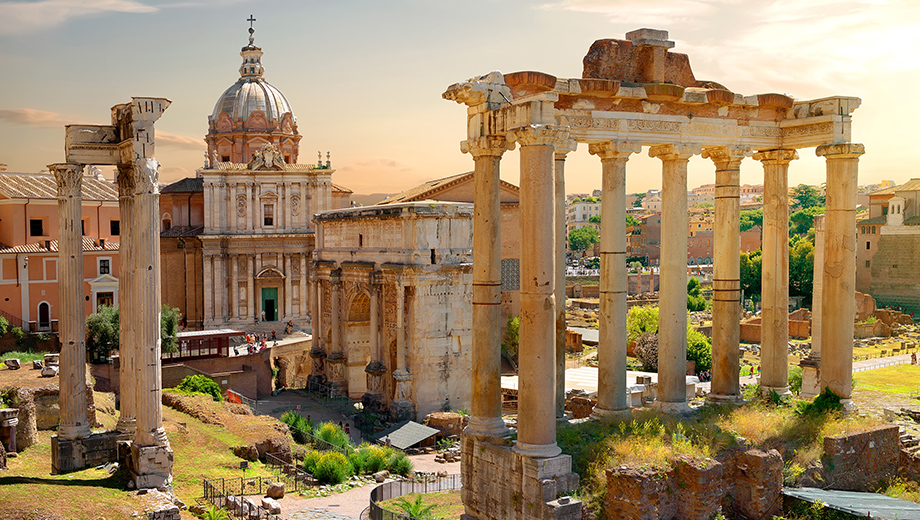
Roman ruins in Rome, Italy
If the Colosseum was Rome’s arena, the Forum was its main stage. Everything that happened in Rome of importance happened here. From temples, law courts, markets, and triumphal arches. Walking the Via Sacra, you’ll pass the Arch of Titus, the Temple of Saturn, and fragments of statues.
Walk up to Palatine Hill offers a quieter escape. According to legend, this is where Romulus founded Rome after killing his twin brother Remus. Later, emperors built their palaces here, complete with gardens and pools. Today, it’s one of the best vantage points in the city: the Forum below on one side, the Colosseum rising on the other.
Why I love it: It is one of the most peaceful places in Rome. I love Palantine Hill the most. If you want a break from the crazy of the big city of Rome. this is a perfect place to spend your time.
Travel Tip: Give yourself at least two hours. In summer, bring water and a hat — shade is rare. A guide or audio app helps turn stones into stories.
3. Vatican City

Photo Credit: Travels With The Crew
Vatican City may be tiny, but it holds some of the world’s greatest treasures. St. Peter’s Basilica is a must visit for the Michelangelo’s Pietà alone. Of course there are hundreds of antiquities inside as well. Climb to the top of the dome for a view that stretches across Rome’s rooftops to the hills beyond.
The Vatican Museums are among the most popular attractions in Rome and the lines to get in prove it! Plan your visit and get jump the line tickets so you can see the tapestries, sculptures, maps, and masterpieces from every century. The finale is the Sistine Chapel, where Michelangelo’s frescoes stretch overhead in vibrant detail. Seeing the Creation of Adam in person is one of those travel moments that you will remember forever.
Why I love it: St. Peter’s and the Sistine Chapel are things you have read about and a part of the worlds most spectacular sights.
Travel Tip: Book tickets well ahead, especially for the museums. Night tours (seasonal) are less crowded. Dress modestly — shoulders and knees must be covered to enter the basilica.
4. Trevi Fountain

Photo Credit: Travels With The crew
Yes, it’s crowded. Yes, it’s touristy. And yes — it’s still magical. The Trevi Fountain is the most famous in the world, a baroque masterpiece where Neptune rides his chariot among cascading water.
According to legend tossing a coin ensures your return to Rome. Just make sure you do it properly: right hand, over your left shoulder. I love visiting early in the morning when the piazza is quiet, or late at night when the fountain glows under soft lights. At those times, you can get a little closer and enjoy the view.
Why I love it: Who doesn’t want to ensure their trip back to Rome?
Travel Tip: The fountain is free to visit, but don’t expect to sit for long — guards often move people along. For a quieter moment, grab gelato and circle back after dark.
Florence & Tuscany: Renaissance Beauty and Tuscan Charm
Florence feels like an open-air museum — every street, piazza, and dome reminds you that this is the birthplace of art. And just beyond, the Tuscan hills and medieval towns are calling for you to visit.
5. Florence’s Duomo

Photo Credit: Travels With The Crew
The Duomo is Florence’s crown jewel. Brunelleschi’s dome still stuns architects with its ingenuity, and climbing the 463 steps to the top is practically a rite of passage.
Inside, Vasari’s fresco of the Last Judgment sits in pride of place, although the inside is much less spectacular than the outside. The exterior, though, is another story: a patchwork of pink, white, and green marble that glows in the sunlight.
Why I love it: Seeing the Duomo for the first time as you turn a corner in Florence never gets old. It dominates the skyline and is a great place to meet up if anyone gets separated from your party.
Travel Tip: Book your dome climb in advance. It’s timed-entry and fills up quickly. And wear comfy shoes — your legs will feel those steps.
6. Uffizi Gallery (Florence)

The Uffizi Gallery is the ultimate art musuem experience. Walking its halls, you come face to face with Botticelli’s Birth of Venus, da Vinci’s early sketches, and Caravaggio’s dramatic canvases. It’s overwhelming in the best way.
If you are an art lover, I would plan on 2 days at the Uffizi. If you like art, but like other things better, you can get by with a single day pass.
Why I love it: Standing in front of Botticelli’s Primavera, I realized how alive centuries-old paint can feel. I
Travel Tip: Buy timed tickets in advance, and go early to avoid crowds. Don’t try to “do it all” in one go — pick a few favorites and linger.
7. Ponte Vecchio (Florence)

Photo Credit: Travels With The Crew
The Ponte Vecchio is Florence’s most iconic bridge. The bridge arches over the Arno,with medieval houses stacked along the river.
Historically, the Ponte Vecchio survived WWII because Hitler supposedly ordered it spared. Today, you will find it filled with musicians, artists, and crowds enjoying the atmosphere.
Why I love it: Watching the Arno glow pink and orange from the bridge and capturing a photo of my son loving it (above) is amazing.
Travel Tip: For a quieter angle, head to the neighboring Ponte Santa Trinita.
8. Siena’s Piazza del Campo
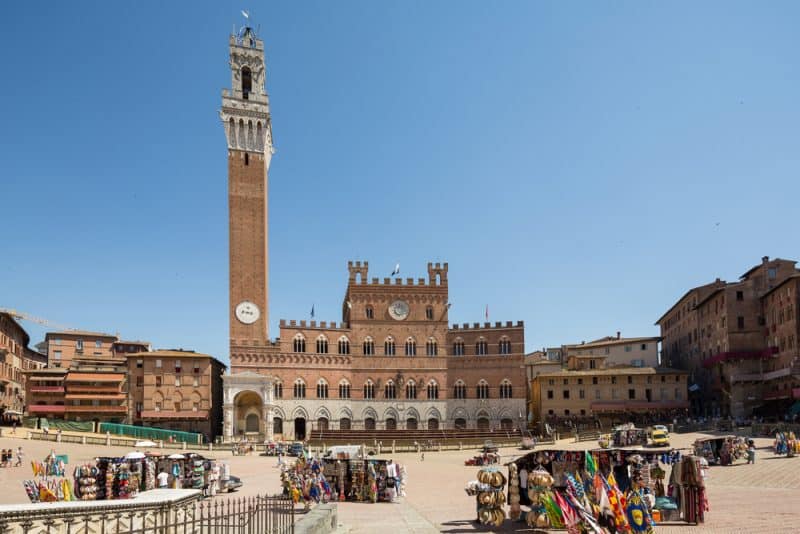
Siena feels like Florence’s arty cousin, and its Piazza del Campo is the city’s centerpiece. Shaped like a fan, this square is famous for the Palio horse race, a wild and thrilling tradition that happens twice each summer. Even without the race, the piazza buzzes with cafés, students, and locals lounging on the bricks.
Siena is a fabulous town to visit while in Tuscany. While still busy, it is like a mini Florence without the large crowds. The Siena duomo is similar in architectural style but the inside is even more interesting than Florence’s Duomo.
Why I love it: Sitting on the warm bricks in late afternoon, gelato in hand, I felt completely at home.
Travel Tip: If you visit in July or August, book accommodations early if you want to see the Palio. Otherwise, enjoy the quieter charm of this medieval gem.
9. San Gimignano
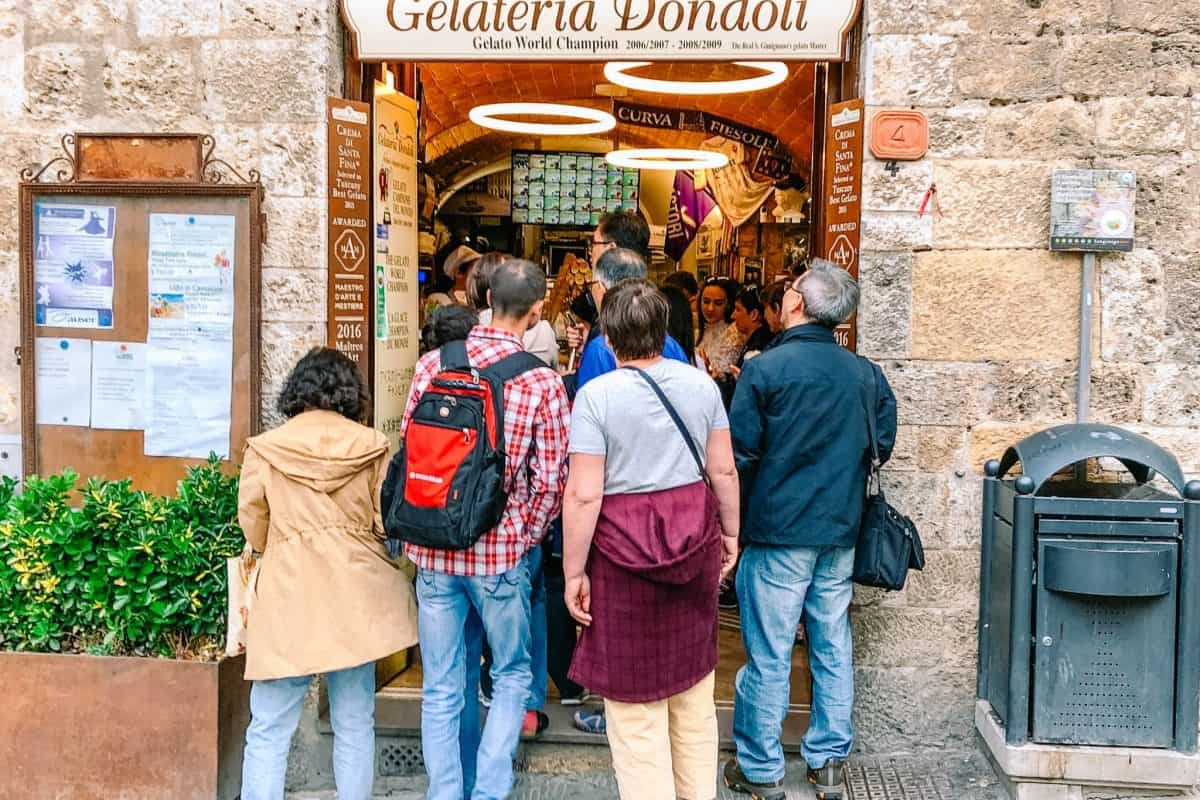
San Gimignano is famous for stone towers built by wealthy families competing for status. Today, 14 towers remain, giving the town its distinctive look.
Wander its cobbled streets and you’ll find charming piazzas, artisan shops, and churches filled with frescoes. But let’s be honest — most people come for the gelato. Gelateria Dondoli in the main square has won world championships, and the flavors are unforgettable (try saffron and pine nut for something unique). As you can see from the picture, people love the gelato!!
Why I love it: From the town walls, the Tuscan hills stretch out like a painting — vineyards, olive groves, and golden fields.
Travel Tip: Visit in the evening, after day-trippers leave. The town glows at sunset, and it feels like you’ve stepped back in time.
10. Pisa’s Leaning Tower

The Leaning Tower is cliché, sure, but it’s also surprisingly beautiful. Its tilt — caused by unstable soil — makes it one of the most photographed spots in Italy. We tried our hand at photography, but it was hard to find a spot that wasn’t full.
The tower is part of a bigger ensemble: the Piazza dei Miracoli, with its cathedral, baptistery, and manicured lawns.
Climbing the tower is an experience in itself. The stairs spiral at an odd angle, and at the top, you’re rewarded with views across Pisa and the surrounding countryside.
Why I love it: Even knowing it leans, seeing it in person is surreal — like your eyes are playing tricks on you.
Travel Tip: Book climb tickets ahead, especially in summer. Don’t skip the baptistery — its acoustics are jaw-dropping when staff demonstrate the echo.
11. Bologna
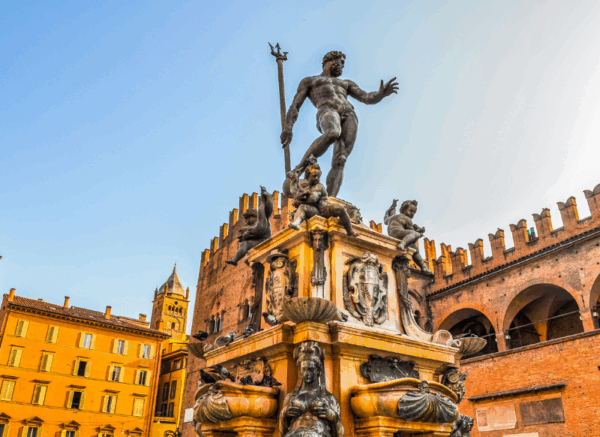
Bologna is known as “La Grassa” (the fat one), it’s the birthplace of tagliatelle al ragù, mortadella, and tortellini. Between meals, wander its endless porticoes, which stretch for miles and keep you shaded from sun or rain.
The city feels vibrant, thanks to its large student population. The Piazza Maggiore is the perfect place to sit with a spritz and watch the world go by, while the Asinelli Tower offers views over red rooftops.
Why I love it: The food isn’t just good — it’s soulful. A bowl of ragù here tastes like it was made to comfort you personally.
Travel Tip: Skip the “spaghetti bolognese” — it doesn’t exist here. Order tagliatelle al ragù for the real deal.
12. Parma
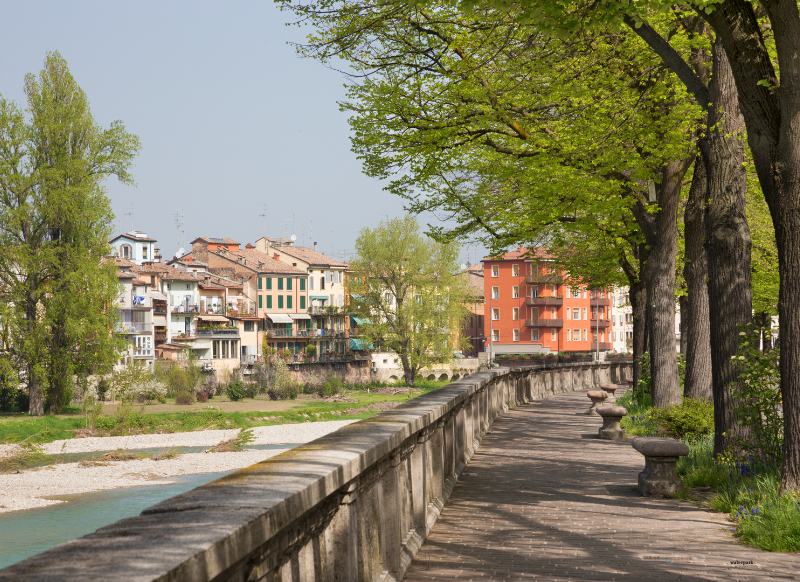
Parma is smaller and quieter than Bologna, but it packs big flavor. This is the home of Parmigiano Reggiano and Prosciutto di Parma, and tasting them here is like tasting them for the first time. You can tour cheese factories or ham producers to see the care behind each product.
The city itself is elegant, with pastel buildings, a Romanesque cathedral, and a pink-marble baptistery. Parma also has a strong music tradition, being the birthplace of composer Giuseppe Verdi.
Why I love it: Sitting in a trattoria, nibbling paper-thin slices of prosciutto with chunks of Parmigiano, I was amazed how good food can taste.
Travel Tip: Visit in autumn during Parma’s food festivals for the ultimate tasting experience.
13. Lucca: The Walled City
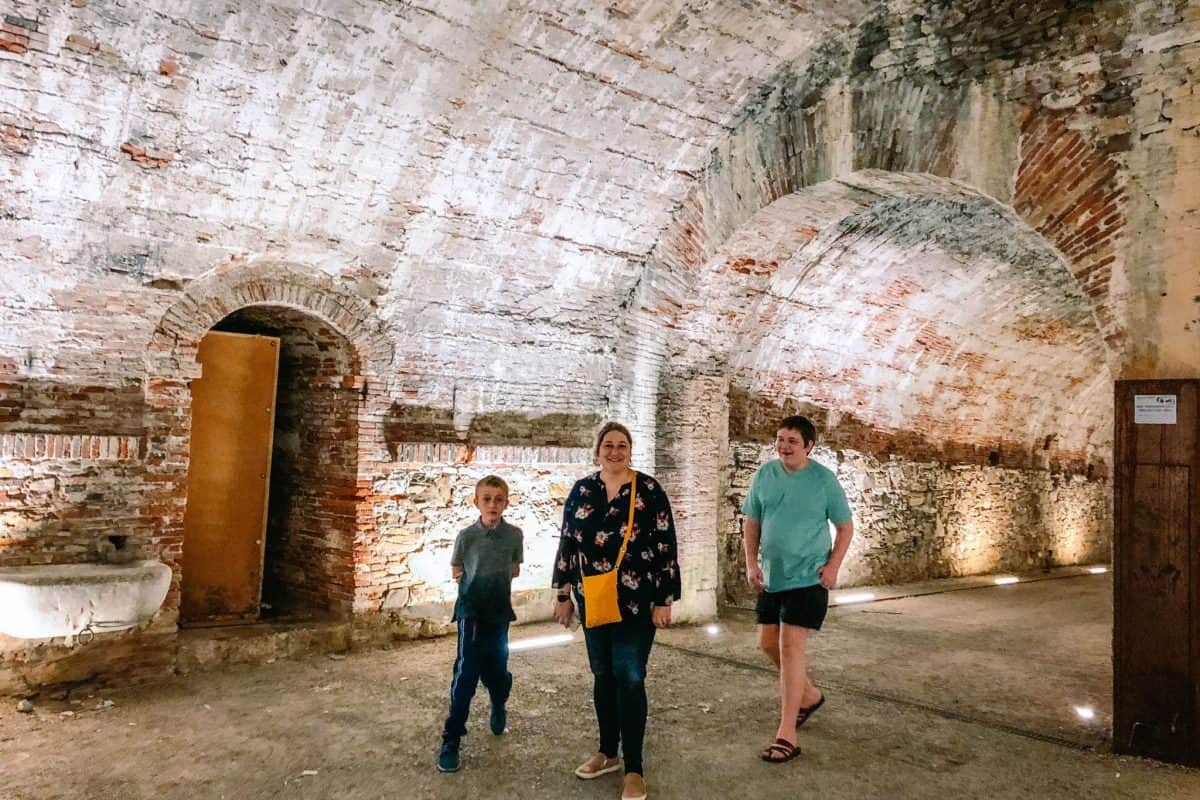
Tucked in northern Tuscany, Lucca is a hidden gem that somehow still flies under the radar. The entire city is encircled by massive Renaissance-era walls that you can walk through. The top of the walls are now a place where locals walk, cycle, and picnic. Inside, Lucca it’s a maze of cobblestone streets, pretty piazzas, and towers you can actually climb for rooftop views.
The walls are Lucca’s most famous feature, and strolling them is the best way to get a feel for the city. The path is wide and shaded, perfect for a leisurely bike ride or just people-watching while soaking in views of tiled rooftops and Tuscan hills beyond.
Why I love it: It is so much fun to walk through the tunnels in the wall to get to the city and then to walk on the walls.
Travel Tip: Rent a bike — you can ride the entire 2.5 miles around the city in under an hour.
The Floating City: Venice

Photo Credit: Travels With The Crew
Venice is unlike anywhere else in the world — a maze of canals, bridges, and piazzas. It has had some large issues with overtourism in the last few decades, but it is one of the most amazing spots in Italy. If you want to help out Venice, stay in the city for a few days instead of day trip in.
14. St. Mark’s Basilica

Photo Credit: Deposit Photos
The crown jewel of Venice, St. Mark’s Basilica has golden mosaics and intricate domes. Sitting on St. Mark’s Square, it’s been the heart of the city for centuries. But don’t just enjoy the outside, the inside hasshimmering ceilings and Byzantine details make it clear why this is one of Europe’s most famous churches.
Why I love it: Standing under the glowing mosaics, you get that goosebump reminder of just how long people have been marveling at the same view.
Travel Tip: Go early in the morning or late in the afternoon to avoid the heaviest crowds.
15. Gondola Ride
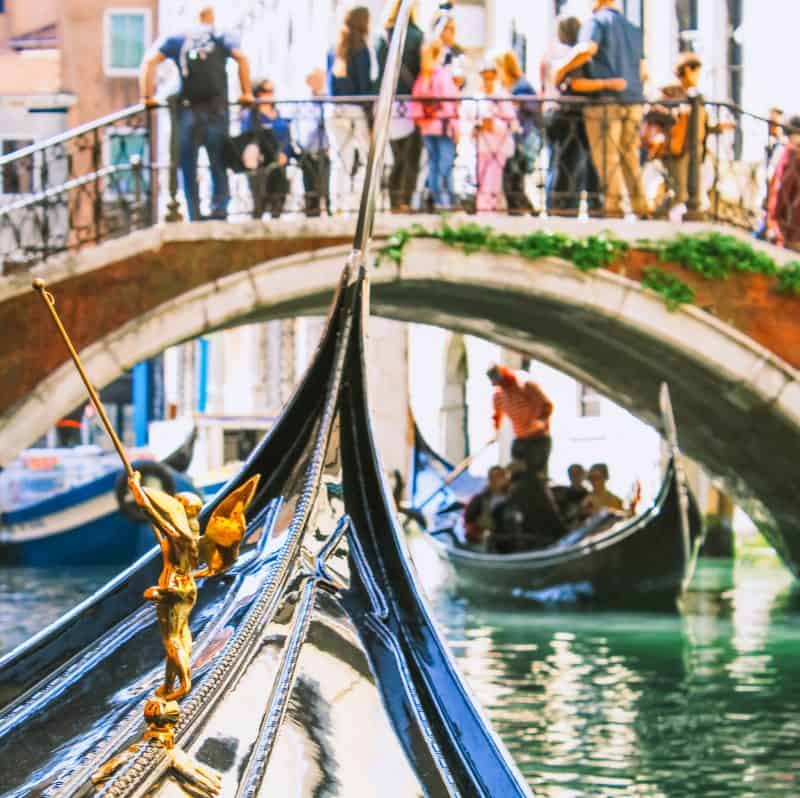
Photo Credit: Travels With The Crew
I used to think that going to Venice and spending money on a gondola ride was a ridiculous waste of money. But then we did the gondola ride on our most recent trip, and I fell in love. There is truly no better way to see Venice than by winding in and out of small canals in the quiet parts of Venice
Why I love it: Watching the city slide by while gliding through the water, it is Venice at its best.
Travel Tip: There are lots of spots to hire gondolas, but if you want a quiet and less expensive ride, rent one in a quieter and less busy spot. Unless you want the grand canal, then rent one alongside the grand canal.
16. Rialto Bridge & Market

Photo Credit: Travels With The Crew.com
The Rialto Bridge is one of Venice’s icons, arching over the Grand Canal. Just steps away, the Rialto Market has fresh fruits and vegetrables and trinkets for visitros. It’s a fun mix of sightseeing and everyday Venetian life, and the perfect spot to snack your way through the morning.
Why I love it: It’s one of the best views of the Grand Canal in Venice.
Travel Tip: Go early to see the fish market in full swing.
Northern Italy: Lakes, Elegance, and Alpine Drama
Northern Italy is dramatic with the Gothic spires in Milan, large lakes tucked into the Alps, Roman amphitheaters still in use, and mountain peaks that look painted against the sky.
17. Milan’s Duomo

Milan’s Duomo is one of the most jaw-dropping cathedrals in Europe. This Gothic masterpiece took nearly six centuries to complete, and the result is a forest of marble spires and statues (more than 3,000 of them!) that seem to reach for the sky. Inside, it’s cool and shadowy, with stained glass windows telling stories that glow when the sun hits them just right.
But the real magic is the rooftop. For a few extra euros, you can climb (or take the elevator) to the terraces, where you walk among the spires themselves. The view of Milan spreading out below, with the Alps faint in the distance, is unforgettable.
Why I love it: Standing on the rooftop, surrounded by intricate stonework, feels like being inside a fairytale castle.
Travel Tip: Don’t miss Leonardo da Vinci’s Last Supper nearby. But book months ahead — tickets vanish fast.
18. Lake Como

Photo Credit: Deposit Photos
Lake Como is where Italians go to relax and look like a million bucks. Nestled against the foothills of the Alps, the lake is all about fun. Boating, swimming and other watersports are what is on the menu. Ferries shuttle between towns like Bellagio (glamorous), Varenna (romantic), and Menaggio (laid-back), each with cobblestone streets, cafés, and gardens perfect for wandering.
The best way to experience Como is from the water. Hop on a ferry or hire a small boat, and you’ll understand why this lake has enchanted everyone from Roman emperors to George Clooney.
Why I love it: Sitting at a lakeside café in Varenna, Diet Coke in hand, watching ferries glide across the water — it feels like peak Italian dolce vita.
Travel Tip: Visit in spring or autumn for fewer crowds and perfect weather. In summer, the lake gets busy with tourists and Milanese escaping the city heat.
19. Verona Arena
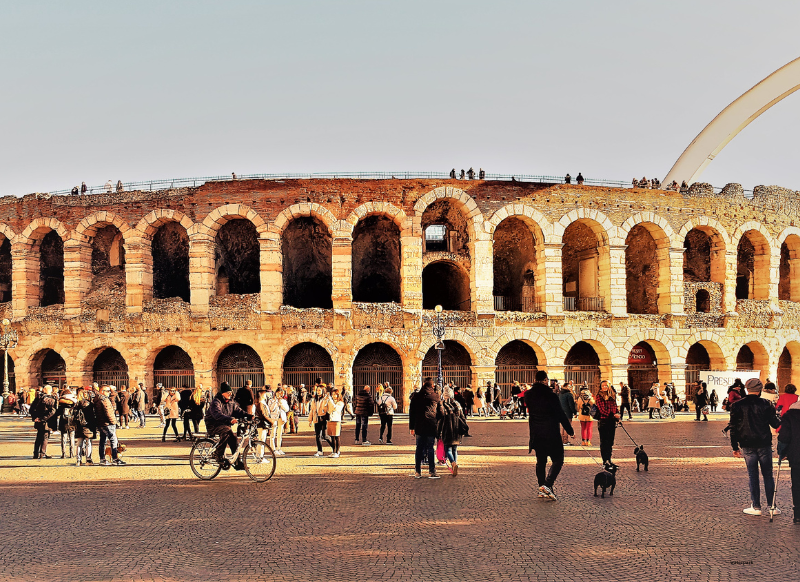
Verona is Shakespeare’s city, but its real star is the Roman Arena. Built in the first century, it’s one of the best-preserved amphitheaters in the world — and it’s still in use. In summer, opera season transforms the arena into a stage under the stars. Imagine listening to Puccini while seated on stone steps that once hosted gladiator fights. It’s an experience everyone should have.
Why I love it: Few places in Italy blend past and present so seamlessly — watching a performance here feels like time travel.
Travel Tip: If opera isn’t your thing, check the schedule — the arena also hosts concerts by modern artists. Book early; tickets go fast.
20. Juliet’s Balcony (Verona)

It’s cheesy, it’s crowded, and it’s still fun. Juliet’s Balcony, tied (loosely) to Shakespeare’s Romeo and Juliet, is actually a 14th-century house with a balcony added later for tourists. But the courtyard is charming, with walls covered in love notes and a bronze statue of Juliet that visitors rub for luck.
Inside the small museum, you’ll see period furniture and views of the courtyard from the famous balcony itself. Outside, street performers and souvenir stands keep the atmosphere lively.
Why I love it: Watching couples leave little notes tucked into cracks in the wall feels sweet and timeless, even if the history is shaky.
Travel Tip: Go early in the morning for a quieter experience. Pair it with a walk to Verona’s Castel San Pietro for sweeping views of the city.
21. The Dolomites

Photo Credit: Deposit Photos
The Dolomites are unlike any mountains you’ve seen — jagged limestone peaks that glow pink at sunrise and sunset (a phenomenon called enrosadira). In summer, alpine meadows bloom with wildflowers, crisscrossed by hiking trails that range from easy strolls to challenging via ferrata climbs. In winter, the region transforms into one of Europe’s best ski destinations, with cozy chalets serving hearty mountain food.
The culture here is unique, too — part Italian, part Austrian, with German often spoken alongside Italian. Towns like Bolzano and Cortina d’Ampezzo mix alpine charm with Italian flair.
Why I love it: Standing in a meadow, surrounded by towering peaks, I felt like I’d stumbled into a postcard. It’s breathtaking every direction you turn.
Travel Tip: Drive the Great Dolomites Road or take a cable car for unforgettable views. Autumn is quieter and stunning with golden larch trees.
Southern Italy: Bold, Colorful, and Unforgettable
Southern Italy is pure drama — cliffs tumbling into turquoise seas, chaotic cities bursting with life, and ruins that whisper stories from millennia past. It’s the part of Italy that grabs you by the shoulders and insists you live a little louder.
22. The Amalfi Coast
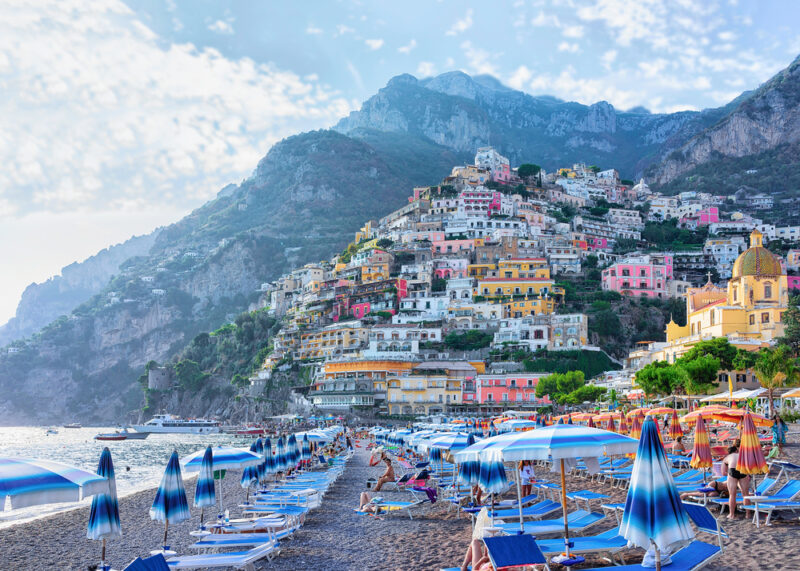
Photo Credit: Deposit Photos
Driving the Amalfi Coast feels like riding the edge of a postcard. Winding roads cling to cliffs, offering glimpses of turquoise water below and pastel-colored towns stacked like Legos against the hillsides. Each town has its own flavor: Positano is glamorous and vertical, Amalfi is historic and lively, Ravello is romantic with views that make you sigh out loud.
Beyond the towns, there are lemon groves, terraced vineyards, and secret coves perfect for swimming. Exploring by boat gives you a different angle — the coastline is even more magical from the water.
Why I love it: Eating lemon granita on a hot day in Amalfi, looking out at the sea, felt like tasting sunshine.
Travel Tip: The roads get crowded in summer. Ferries between towns are often faster (and way more scenic).
23. Capri
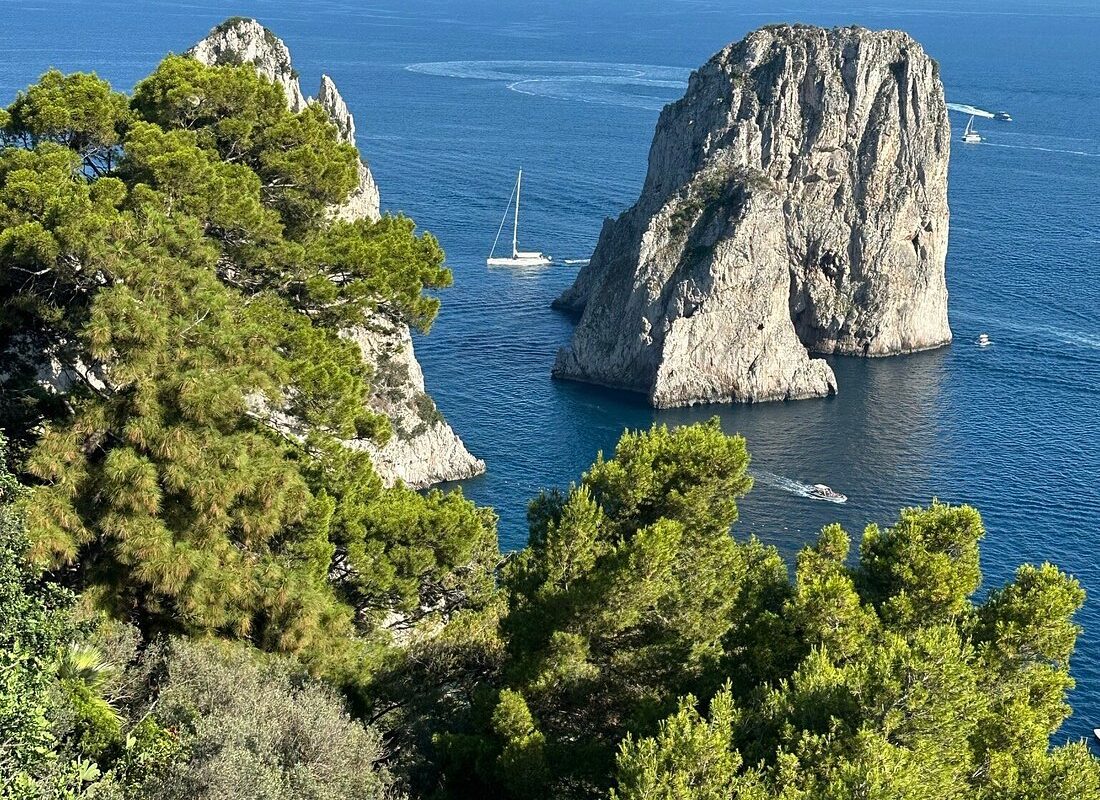
Capri is glamorous, yes, but it’s also wildly beautiful. A boat trip around the island takes you to sea caves and hidden coves, with the famous Blue Grotto glowing electric blue inside. Take the chairlift up to Mount Solaro for panoramic views that stretch all the way to Naples and the Amalfi Coast.
Capri Town is chic, filled with designer boutiques and cafés perfect for people-watching. Anacapri, higher up the island, feels more relaxed, with artisan shops and winding streets draped in bougainvillea.
Why I love it: Sitting at a cliffside café, watching boats drift past the Faraglioni rocks, felt like stepping into a movie.
Travel Tip: Visit outside of peak summer if you can — spring and fall bring fewer crowds and gentler prices.
24. Naples

Naples is messy, loud, chaotic — and completely alive. It’s a very different experience that Florence, Rome or Venice. It’s the birthplace of pizza, and eating a margherita here is non-negotiable. The historic center is a UNESCO World Heritage Site, packed with narrow streets, buzzing markets, and churches tucked around every corner.
The city can feel overwhelming at first, but that’s part of its charm. Beyond the chaos, Naples also holds treasures like the Naples National Archaeological Museum, home to many artifacts from Pompeii and Herculaneum.
Why I love it: Naples feels raw and real. There’s nothing polished or staged about it, and that’s what makes it unforgettable.
Travel Tip: Keep your wits about you in crowded areas, and dive straight into the food scene — from street food like fried pizza to Michelin-starred restaurants.
25. Pompeii & Herculaneum
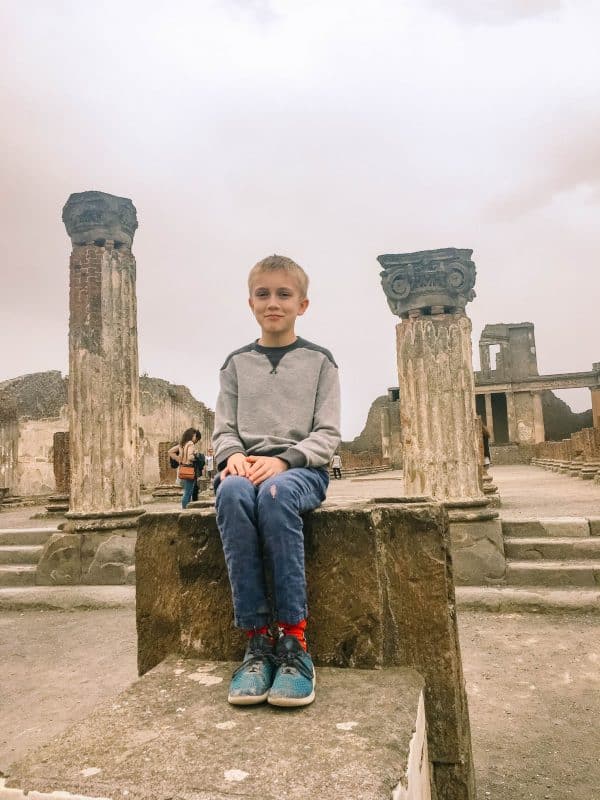
Photo Credit: Travels with the Crew
Few places are as haunting as Pompeii. Buried under volcanic ash in AD 79, the city was frozen in time when Mount Vesuvius erupted. Today, you can walk its streets, explore villas, bakeries, and even see frescoes still clinging to the walls. It’s vast and overwhelming, so don’t expect to see every nook and cranny while you are there, it would take days and days.
Nearby Herculaneum is smaller but even better preserved. Wooden beams, mosaics, and household items survived here, giving a more intimate glimpse of daily life. Visiting both gives you a fuller picture of what was lost that day.
Why I love it: Pompeii is one of the stories you hear about growing up and to see it in real life is incredible.
Travel Tip: Wear good shoes — Pompeii’s streets are uneven. Herculaneum is less crowded and pairs well with a half-day trip.
26. Mount Vesuvius
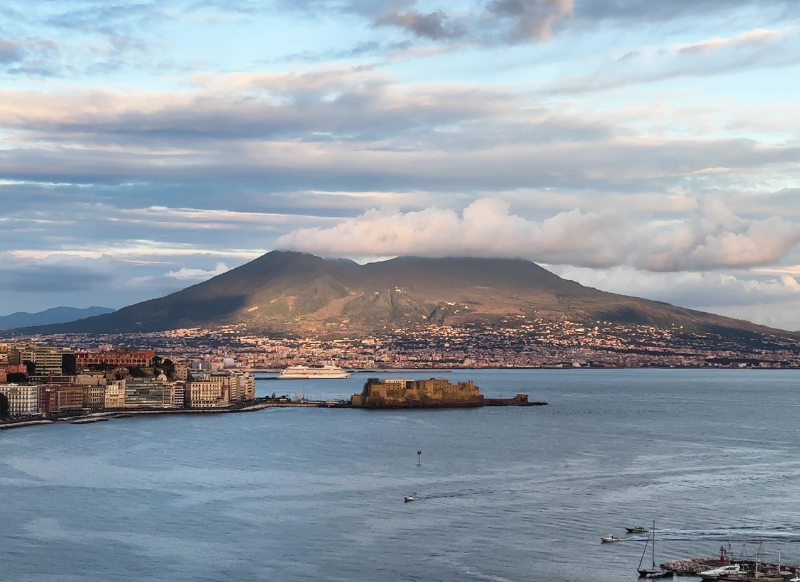
It’s one thing to see Vesuvius looming over Naples, another to stand on its rim. The hike up is short but steep, and at the top you can peer into the crater while looking out over the Bay of Naples. It’s both beautiful and unsettling, knowing the volcano is still active.
The path is dusty, with switchbacks that wind through volcanic rock. On a clear day, the view stretches for miles, and you can see how this mountain both shaped and destroyed the region.
Why I love it: Standing on the edge of the crater, with Naples spread out below, you can imagine the kind of force this volcano has.
Travel Tip: Bring water and sturdy shoes. Tours often combine Vesuvius with Pompeii for a full day of adventure.
27. Matera
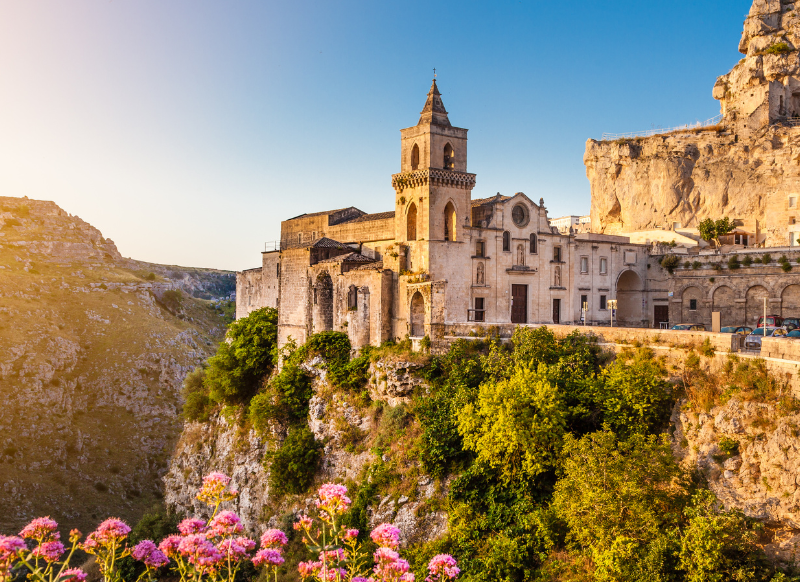
Matera doesn’t just look ancient — it is. The city’s cave dwellings, known as the Sassi, have been inhabited for thousands of years. Until the mid-20th century, families lived in these rock-hewn homes; today, many have been transformed into boutique hotels, restaurants, and museums.
Wandering Matera feels like stepping into a movie set — and in fact, it has been one, featured in films like The Passion of the Christ and No Time to Die. By day, the stone city glows honey-colored; by night, lights twinkle across the ravine.
Why I love it: Staying overnight in a cave hotel, is a must-do if you can swing it. Unbelievable!
Travel Tip: Don’t just day-trip. Spend a night or two to see Matera lit up at night — it’s pure magic.
The Islands: Sicily & Sardinia
Italy’s islands feel like entire worlds of their own. Sicily is a crossroads of cultures, where Greek temples meet Norman palaces and markets hum with energy. Sardinia, by contrast, is all about wild beauty — turquoise seas, rugged cliffs, and beaches that make you wonder if you accidentally landed in the Caribbean.
28. Valley of the Temples (Agrigento, Sicily)
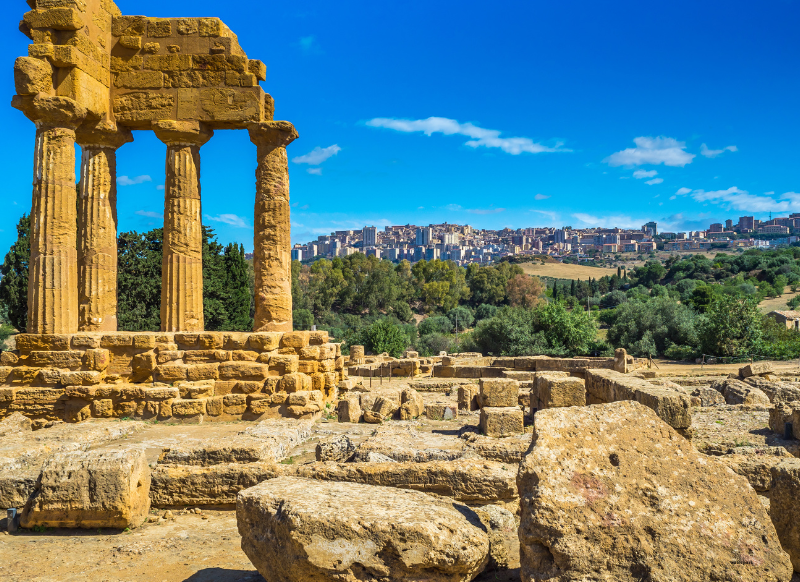
The Valley of the Temples is one of the most extraordinary archaeological sites in the world. Perched on a ridge above the Sicilian countryside, these Greek temples have stood for over 2,000 years, their golden stone glowing in the afternoon sun. The Temple of Concordia is especially stunning, one of the best-preserved Doric temples anywhere.
Walking through the site, you pass olive groves, almond trees, and ruins that feel frozen in time. It’s easy to forget you’re in Italy — this corner of Sicily feels more like stepping into ancient Greece.
Why I love it: Seeing the temples lit at sunset, with the hills fading into shadow, is one of those pinch-me travel moments.
Travel Tip: Visit in late afternoon to catch the golden light. Wear comfortable shoes — the site is spread out and involves plenty of walking.
29. Palermo (Sicily)
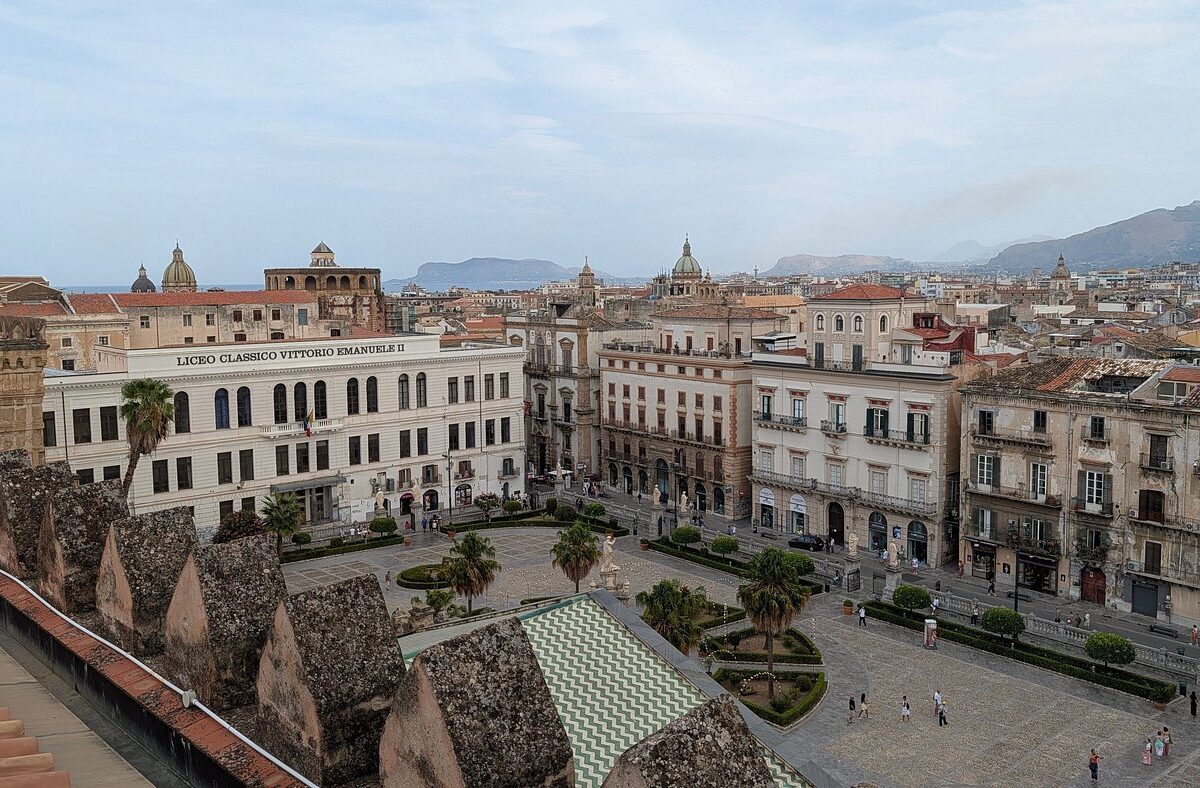
Palermo is chaotic, colorful, and completely unique. The city reflects centuries of history — Arab domes, Norman palaces, baroque churches,and modern-day markets all blend together. The Palatine Chapel, with its famous mosaics, is a masterpiece of medieval art, while the Cathedral shows layers of architecture added over the centuries.
Why I love it: Palermo is a city that has just as much amazing architecture as any other city in Italy, but it is much much less crowded.
Travel Tip: Don’t rush. Palermo takes time to appreciate. Explore the backstreets, linger in markets, and let yourself get swept up in the chaos.
30. Sardinia’s Costa Smeralda
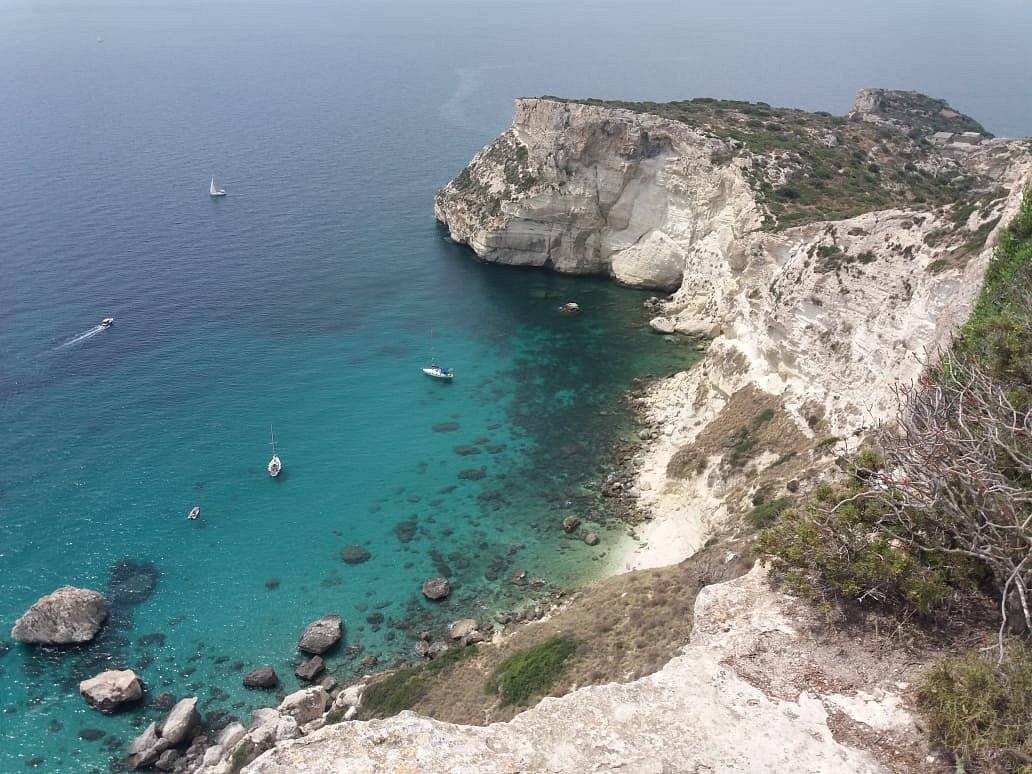
The Costa Smeralda is Sardinia’s glamorous side — a stretch of coastline famous for its white-sand beaches, turquoise waters, and luxury resorts. But beyond the yachts and polished marinas, the natural beauty steals the show. The beaches look almost tropical, with shallow, crystalline water perfect for swimming or snorkeling.
Drive along the coast and you’ll find hidden coves, rugged cliffs, and villages where time seems to slow down. Even if you’re not here to splurge, you’ll find plenty of places to spread out a towel and enjoy the sun.
Why I love it: Floating in water so clear you can see your toes, surrounded by granite cliffs, I thought, “This can’t possibly be Europe.” But it is — and it’s spectacular.
Travel Tip: Visit in June or September for warm weather without the peak summer crowds (or prices).
31. Cagliari (Sardinia)
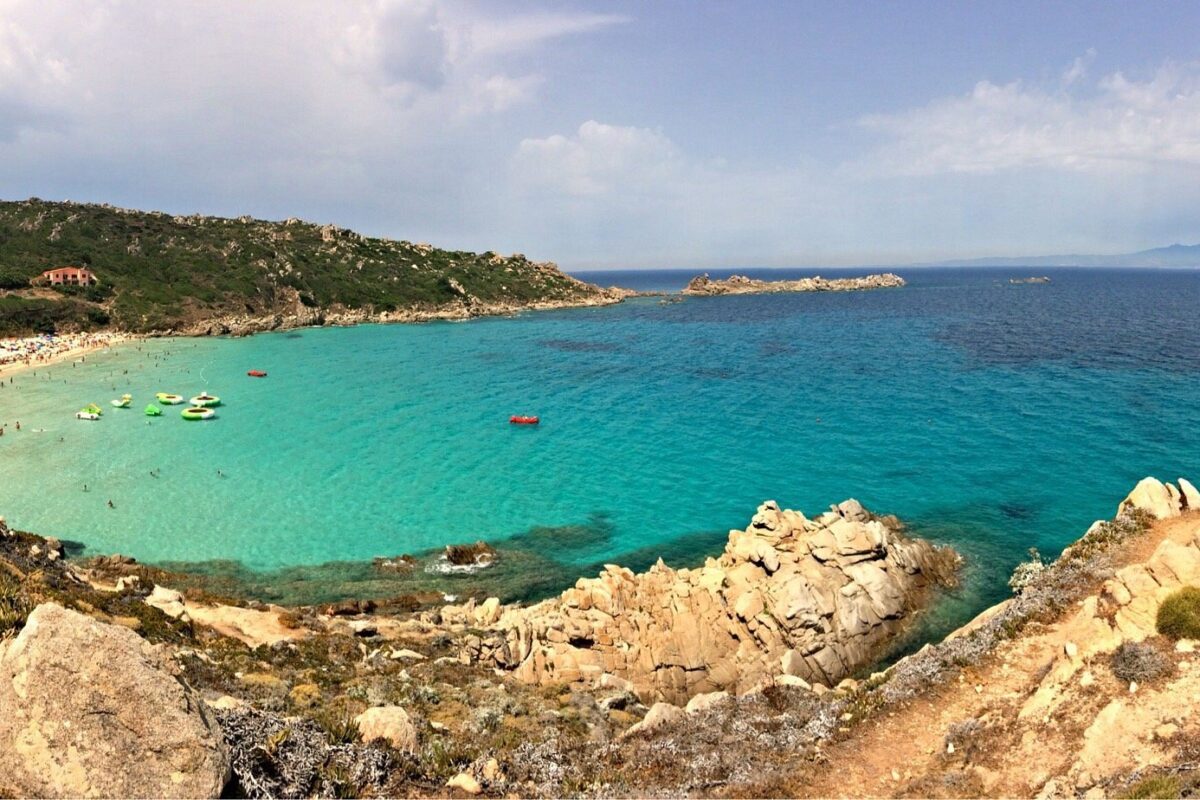
Sardinia’s capital, Cagliari, is a city of contrasts — Roman ruins, medieval streets, and a lively modern vibe all mixed together. The Castello district sits high on a hill, with narrow alleys, old stone walls, and sweeping views over the bay. Down by the waterfront, cafés and seafood restaurants spill onto the streets.
History buffs will love the Roman amphitheater carved into rock and the Archaeological Museum with its Nuragic artifacts. Beach lovers can head to Poetto Beach, a long sandy stretch just minutes from the city center.
Why I love it: Having aperitivo on a terrace in Castello, watching the sun set over the sea, felt like the perfect blend of history and dolce vita.
Travel Tip: Cagliari makes a great base for exploring southern Sardinia — rent a car to discover hidden beaches and charming villages nearby.
Final Thoughts
And there you have it: 31 unforgettable places that make up the ultimate Italian bucket list. From Rome’s ancient ruins to Florence’s Renaissance treasures, from the drama of the Amalfi Coast to the wild beauty of Sardinia, Italy is a country that keeps giving.
The best part? This isn’t a “one-and-done” list. Each trip to Italy feels like an appetizer — delicious on its own, but leaving you hungry for more. So take your time, savor each stop, and know that Italy will always be waiting with another adventure.
There may be affiliate links in this post. Read my disclosure policy to learn more.


Leave a Comment